Exploring Sicily’s DOC Wines: A New Age of Quality

Sicily DOC wines are exciting, fresh and a world waiting to be explored. I visit the island to discover a new age of quality that’s all in the family.
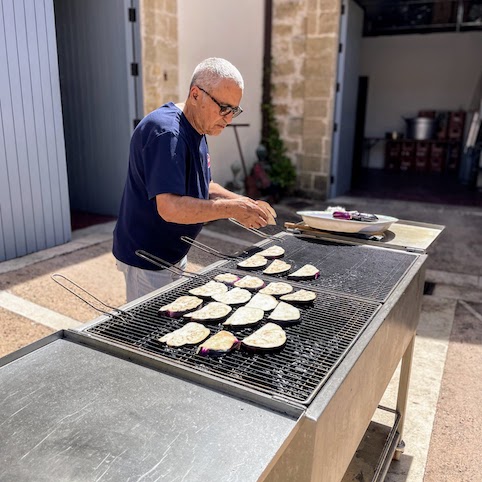
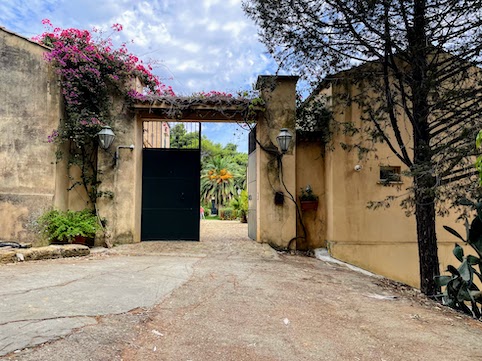
In the “baglio” or traditional central courtyard of Tonnio Baglio Ceuso, the father of the winery is frying aubergine slices and fennel sausages over glowing charcoal. The aroma is fantastic but, not speaking any Italian I can only give him a thumbs up and get one back with an accompanying grin.

Now semi-retired, he enjoys watching his descendants do most of the wine work while he offers sage advice that I’m sure is warmly welcomed, although perhaps not always, but hey, that’s families the world over.

I’m discovering a new generation of Sicilian wine makers, the sons, daughters and even great grandchildren, of the originals, who are now front and centre in Sicily, and that’s a good thing for Sicilian wine. The island’s wine scene is no longer dominated by the production of cheap, generic, wines, as it has been for so long.

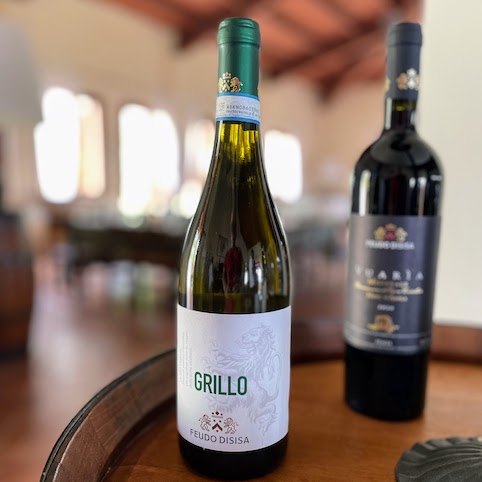
The big name red grapes such as Nero d’Avolo, Nerello Mascalese and Frappato ‘fruity’ are still king of course. Whilst for whites, Cataratto (now named Lucido, because apparently we non-Italians can’t pronounce Cataratto) can still be found across the island, and crisp, savoury Grillo (used to make Masala) is now a fine white wine all on its own. Winemakers are using these grapes to make exciting new style wines, as well as growing ‘international’ grapes such as Syrah, Merlot and Chardonnay for blending and single grape production

There is power in a union
Around 450 forward thinking Sicilian wine makers came together in 2011 to promote  tradition, innovation, and quality over quantity in Sicilian wine, as well as to support each other in what can be challenging times, by creating Consorzio di Tutela Vini Sicilia DOC which now numbers 7,000 winemakers and more than 530 bottlers.

One problem they all face is climate change.  A young winemaker showed me a photo taken last year of the lake that has always irrigated his vines, ‘this year,’ he said drawing with his finger, ‘this….’. He indicated an area of water so reduced it was hard to believe it was the same lake. The patches of blackened undergrowth I saw all over the island also witness the lack of rain this year and the outbreaks of devastating fires.

Positivity is the main vibe from all the winemakers I met though, even when grumbling slightly about how big UK importers are still adamant they only want cheap plonk.  They are reluctant to buy the more expensive quality wines these winemakers have dedicated themselves to, but that’s changing as UK wine lovers wake up to the new Sicilian scene and its amazing options.

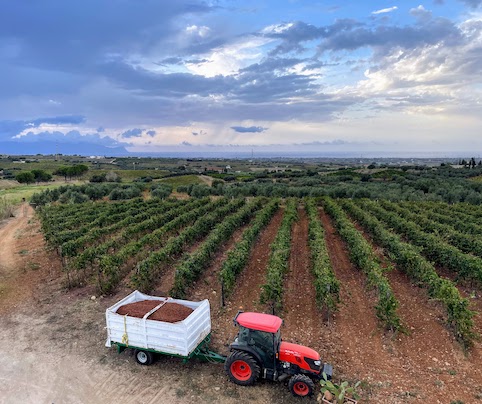
The island can have four different climates over a vineyard surface that’s three times that of New Zealand’s, which allows for a lot of wine variety, but all over the DOC portfolio, quality and organic farming is key.

Sicily is now the top producer of organic grapevines in Italy. By leveraging the natural climatic conditions of the island, fewer treatments are needed. One winemaker told me how he is trialling a natural insecticide derived from local cacti as a cheap and effective crop protection solution.

Don’t walk away René
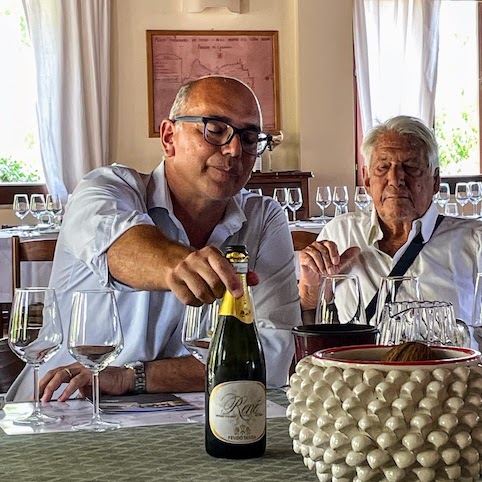
At Fuedo Diso, a fifth generation winery, the Di Lorenzo family were the first registered company to produce Chardonnay in Sicily. They’ve owned the winery, whose Baglio dates back to to the 17th Century, since around 1867, and whilst the buildings are gorgeously ancient, the equipment they use is state of the art.

Their Grillo, Chara, Nero d’Avola and Adhara wines are fresh and revitalising. Their particularly deliciously crisp Grillo is a star wine, while their sparkling wine René, named after the patriarch, comes  from the oldest Chardonnay vineyard in the Feudo. As we taste through their range of wines, René is front and centre with his glass, and he’s not spitting any out. Mind you, neither am I.

Vinifying up a storm 

The fresh energy at the Tola winery is also palpable. As I tasted the wines in their ultra modern building south east of Palermo, the skies darkened and the giant windows framed dramatic lightning storms over the gulf of Castellamare to the north.

The winery crackles with life – all white surfaces and sharp angles it’s run by Francesco Tola almost 400m above sea level. This makes the temperature moderate –  it can actually be very cold at night – with sea breezes bringing salinity to his classic Sicilian grapes of Nero d’Avola, Syrah, Grillo, Catarratto, Insolia and Zibibbo, as well his international vines of Chardonnay, Sauvignon Blanc and Pinot Noir.
He uses steel tanks a lot, to keep the freshness of the grapes alive to produce light, zesty Nero d’Avola and, as a very modern winemaker, he is happy to use the latest machinery for efficiency, while keeping his CO2 emissions low. 

Out back a machine is processing just picked grapes, blowing streams of stems into a pile to be composted. I can’t help but notice the workers here are all wearing Kippahs. ‘ Ah yes,’ says Mimmo, ‘this batch is for kosher wine and so can be only touched by Sabbath-observant Jews from the harvest to the bottling’. An interesting example of finding markets for his second division grapes.

His flagship red wine Black Label – Nero d’Avola Doc Sicilia – though is traditionally made from the best hand harvested grapes and is an intensely fruity example, while his sparkling wine, made from Catarratto and Grillo grapes, gets its fizz from the Charmat Method, where the second fermentation that gives the lovely bubbles is created by using large pressurised tanks, and not bottle ‘dosage’, as used for Champagne. This makes for wonderfully bright bright fruit flavours

Concrete Proof of change
Concrete often gets a bad rep. In the old Soviet Union it was used for shoddy buildings that fell down a lot, usually due to the ‘concrete’ being made of flour, water and potato peelings.

However for a long time proper concrete was the storage vessel of choice for winemakers –  cheap, easy to clean, stable and hardwearing, it’s also slightly porous and its thickness makes the wine inside less susceptible to temperature changes or ‘shock’. 

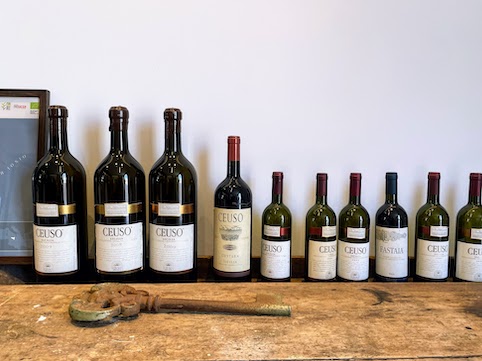
Stainless steel seduced many winemakers in the 1980s and lots of old concrete tanks were literally smashed up. Back at  Tonnino Baglio Ceuso, with the aubergines eaten, I went with the chef’s daughter, Francesca, to see the usual steel vats, but also their row of concrete tanks that were still in place when they took over in 2023.

Their flagship wine Ceuso, created by enologist Giacomo Tachis in the 90s, is a modern blend of Nero d’Avola, Cabernet Sauvignon and Merlot. After fermentation, the wine is sent to mature in these old cement tanks before moving on to Seguin Moreau barrels. The result is an exceptional wine with velvet tannins and which can be aged for years in your own ‘cellar’.
They also produce a delicious dessert wine, ZIBÒ Made from their best Zibibbo grapes, it’s a reimagined Sicilian classic being fresh and balanced and not as cloying as older styles.

The variety of wines at each winery was remarkable. Innovation was everywhere and this was confirmed at a final tasting in town with twenty six producers and their wines present. It was head-spinning and not just because of the wine being drunk.

Twenty six passionate (yes, for once that word is appropriate) winemakers is a big crowd and whilst I tried to sample every wine, it was impossible. So many superb wines in one place was a remarkable one off event, and all the winemakers were lively and refreshingly young and keen. I naively asked some of them if they had ever wanted a different job from the family business and not one said ‘yes’ and no wonder.

The work is undoubtedly hard; it can be heart-breaking when a year fails to meet expectations, or an experiment with planting fails, but the joy of creating something superb cannot be beaten.  Sicilia DOC wines are moving forward at pace, the bad old days are over, and their wines should be on everyone’s oenological shopping list

The sausages, by the way, were delicious!

Of palaces, pastries and pesto

Take a short break in Genova, the city of staircases with a charm uniquely of its own.

Christopher Columbus would not be pleased to see what’s become of the house he was born in. In fact, it’s not actually his original house at all but a reconstruction. The original was shelled half to bits by the French in 1684, and then finished off in 1900 by Genovan town planners.

It seems rather rough on the home of the city’s most famous son, but you soon realise that Genovans are not overtly given to sentiment. It’s a tough and gritty town on the surface, but with a soft centre made of pastries and pesto.

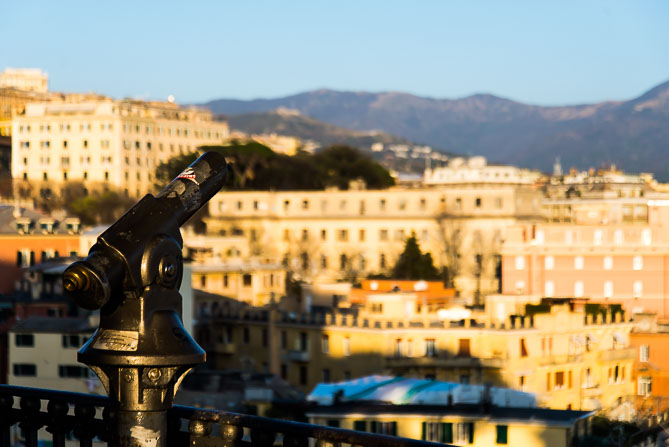
As you fly in, you see how Genova rises steeply from the sea, climbing hand over hand up the Ligurian mountains. At its base is a tangle of alleyways and ancient overlapping buildings that lean together for support, and thankfully leave little space for cars.

The town is hard-working and constantly in motion. It made shiploads of money back in the day from world trade, and the palaces that were built from the profits are grand and numerous. Some are now offices but many are fine museums while others are mutating into cool bars and antique shops.

Before heading off to explore the alleys, I stopped for lunch at Eataly on the docks and a seafood restaurant called Il Marin with fine third-floor views of the town.

Chef uses local produce and food is light and very good for the money. I had Mackerel ‘Giudia Style’, then spaghetti riddled through with local small, pink, tasty squid with spring onions, and followed that with Venchi dark chocolate and pear and coffee.

Heading into the dark mediaeval alleyways after was like entering catacombs. Often the only clues to the presence of the modern world outside being air conditioning units hanging precariously on walls and glimpses of sky far overhead.

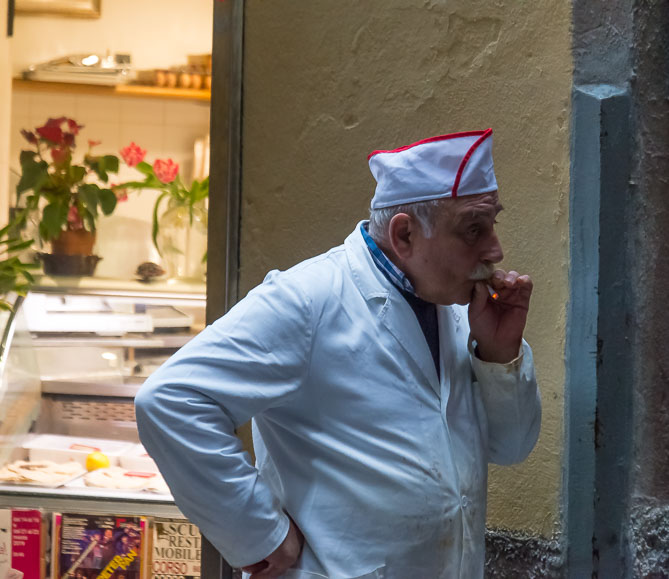
Many of the ‘botteghe storiche’ or historic shops here have been trading for 200 years, and include confectioners, tailors, bakeries and butchers. I fired down a fast expresso at a tiny place called Tazze Pazze, said to have the best coffee in Genova and pressed on deeper.

A small ancient tripe shop, Tripperia La Casana, with marble tables seemingly unchanged since forever, had an aroma that had me heading straight back out again. Their tripe stew is very popular, but it’s not for me.


Ah but chocolate, yes please. Viganotti is a tiny shop that has made and sold chocolates since 1886. Peer past the owner’s mother, on stern guard at the old wooden counter, and you can glimpse belt-driven ancient machinery grinding and mixing. Each piece is different, not mass-produced, and delicious.

Not to be missed whenever you see it, and you see it a lot, is the Genovan focaccia. a regional specialty (fugassa in the Ligurian dialect). Thinner than usual focaccia and crispier, Genovans love it so much they will even dip it into their coffee the way we do digestives


Head for the Focacceria San Lorenzo where they sell by weight; the Focaccia di Recco, is the one to definitely try – two very thin layers of dough sandwiching fresh cheese that melts in the fierce oven heat.

It came in handy for energy as I began to labour up the inclines. Puffing up one particularly steep slope, I was overtaken by a young Genovan mother pushing a loaded double pram with one hand while having a phone conversation with the other. She made it look easy, while I stopped and had a conversation with my shoes for a short while.

Luckily the Genovans have, over time, found their ‘vertical city’ a bit challenging as well, and have done something about it with elevators and funiculars.

Next to Genova’s main rail station, you can take the Montegalletto elevator built in 1929 and modernised in 2004, to reach the Castello D’Albertis, a bizarre neo-gothic castle now a museum built by a wealthy 18th Century citizen to show off his collection of world artefacts gathered from his travels.

Coming out of the elevator you immediately feel a fresh breeze and light floods the pretty gardens. No wonder the wealthy lived high up in this Montegalletto district and looked down on the docks below.

Walking back down, I headed for the Via Garibaldi which is not the home of the biscuits, but the site of many grand Rolli palaces and a UNESCO World Heritage Site, to take a peek at some Rubens, Van Dykes and Caravaggios.

Some serious shopping can be had on Via XXV Aprile, via Roma and Galleria Mazzini, all close together, but I had an appointment at another palace, this a charmingly semi-restored one for the Pesto experience at the 16th Century Palazzo Imperiale

Genovans firmly believe their basil is the only one for pesto. The sea air permeates the plant, they say, giving it a unique flavour and every Genovan has a pot or two on their windowsill.

Recipe: pinch out a good handful of leaves, put in a marble pestle and mortar with a sliver of garlic and some salt and pound to an aromatic paste. Then pound in pine nuts, pecorino cheese and Ligurian olive oil. Presto, you have pesto.

Interestingly, the law now allows passengers to take a 500-gram jar, or two 250-gram jars, in hand luggage when flying out of Genoa. They must be flying directly from Genoa though, and the pesto must be from Genoa.

I ate my pesto on some focaccia, washing it down with clean, sharp, Vermentino one of Liguria’s most famous white wines.

Downstairs I quickly checked out a seriously Hoxton-vibe cocktail bar Les Rouges,  set in the elegantly decaying grandeur of a suite of what were once the frescoed family rooms. Definitely a place to come back to in the evening.

Of course, Genova has an historic food market, and what a market it is. The Mercato Orientale is not an oriental market, it means East in Italian, but one crammed with the freshest produce of Italy and of course bushels of fresh basil.

Soon you’ll be able to satisfy your aroused hunger pangs there too as the centre is being converted to a kind of food court, where around 14 restaurants will be cooking up a range of dishes from Michelin to street style.

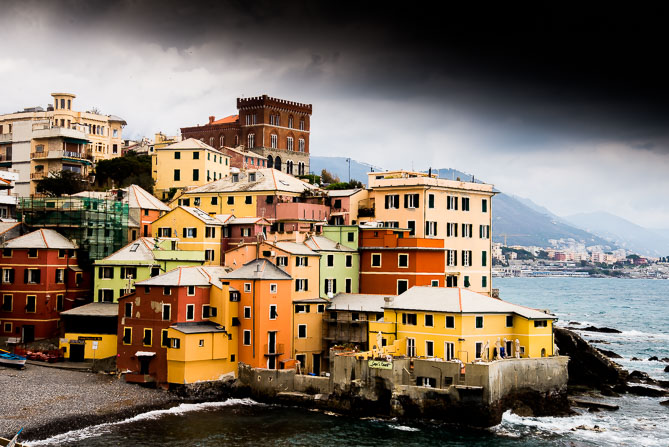
To eat up the rest of the afternoon I headed out of town to Boccadasse a short ride away. It is picture perfect, even on this rather stormy day, and in fact all the better for being out of season as you get a true feel for the place wandering its now empty alleys.

Peering into Ittiturismo Boccadasse a seafood restaurant on the beach, I could see Italian families crammed shoulder to shoulder throwing down the specials caught that morning locally and written up on a blackboard. Prices were a lot cheaper than Portofino up the road and the food looked fresh, rustic and honest.

I’d been told Le Rune was a good restaurant for an evening meal. Like so many places in Genova it was on multiple confusing levels and seemed to wander from building to building. Clambering to the highest level I was surprised to find I was actually on the same level as another street.

Food was excellent, deceptively simple but based on seasonal vegetables and a deft hand with classics such as spaghetti vongole, the shellfish sweet and generous.

Next day was a time for checking out Genova’s other attractions, such as the famous aquarium, the Galata Museo del Mare and Palazzo Ducale which houses some of the city’s most important artworks.

But the alleys drew me back for a poke around classic tailors, for glimpses into carnal butchers and blissful bakers and to buy a great big gelato from the famous Cremeria Buonafede in Via Luccoli.

I did eye up the “panna montata” (whipped cream) but you have to draw the line somewhere even in Genova. Maybe next weekend.

Genova Facts

Thanks to @GenovaEventi and @genovamorethanthis  the Municipality of Genoa, the Chamber of Commerce Genova and the Genoa Tourist Offices www.visitgenoa.it

Get there:

BA (ba.com) flies from London Gatwick to Genoa with return flights starting from £86.72 including all taxes, charges and one hold bag.

Stay:

Hotel de Ville Down on the front. Comfort rooms start from 143 Euros per room per night based on two sharing and including breakfast and city tax

hoteldeville.it/en/

Hotel Bristol Palace A grand old style hotel in town by the railway station. Classic double rooms start at 204 Euros per room per night based on two sharing and including breakfast and city tax

www.hotelbristolpalace.it/en

Hotel Valery A boutique guest house located inside Palazzo Montanaro. Double rooms start from 78 Euros per room per night based on two sharing and including breakfast.

www.valeryguesthouse.com


Get Your Modena Running

Fast cars, fat singers, fine food and fizzy Lambrusco, in Modena you get to experience it all.

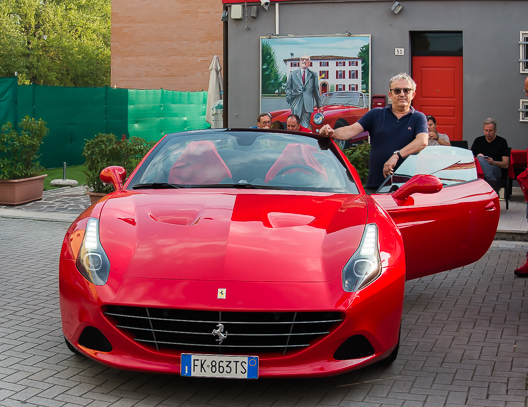
Ferrari California in Marranelo

Man and Machine

‘Push! Push! Push!’, cries the man in the passenger seat and so I obligingly push down hard on the accelerator. The bright red Ferrari California makes a noise like Pavarotti getting his fingers caught in a door and £160,000 worth of supercar hurls itself forward as I frantically work the paddle gear change to keep up. The speedo needle rushes toward the motorway limit and then past it, but it isn’t even a fifth of the way around its elegant dial yet.

‘Piano, piano,’ ‘gently, gently’, advises my Italian co-pilot as the rear of a giant lorry suddenly fills the windscreen, so I let off the pedal, dab the brakes and the car majestically slows down as if a giant hand has grasped it.  Continue reading

Abruzzo. The Italian region ready to be revealed

Nun’s naughty bits, a wine that’s not a cheese, wine boxes that aren’t square and vino that flows from a drinking fountain, Nick finds Abruzzo is an Italian region that’s full of surprises.

Nuns Breast, a patisserie from Abruzzo

A lovely bun

“They’re called ‘Nun’s’ Breasts’, “Sise delle Monache” in Italian, says Valentina di Camillo unveiling a tray of freshly made pastries in the garden overlooking her family’s glorious vineyards. The origins of the pastry’s name are vague, they were first called ‘Three Mountains’ owing to their triple peaks but the new name came about when a nun… well, let’s leave it there.

Liver sausage

Liver sausage, goes great with red wine.

They are delicious, soft as can be and stuffed to bursting with sinful crème patissiere. One of these and a black coffee and your morning is off to a good start. Personally I am eating them just after an al fresco breakfast consisting of superb cured meats, pungent cheeses and a fair few glasses of Valentina’s lovely wines, so I am using the coffee and sugar to offset the alcohol I’ve knocked back. Continue reading