I’ve always said that if you want a decent French meal in France you should head to England. I was wrong, you should head to Richmond
Yes I know it’s rage baiting to say the French can’t cook anymore, but outside of places like Paris and Lyon standards have gone down. I say that with over twenty years of owning a shack in France and visiting multiple times a year.
Young French people seem to only want pizzas and fast food, perhaps because their parents have forgotten what grandmere taught them and nothing is being passed down. Local restaurants serve steak frites, or a dish that might as well have the supermarket label still attached. And as for the ‘serve yourself’ hors d’oeuvres stations…
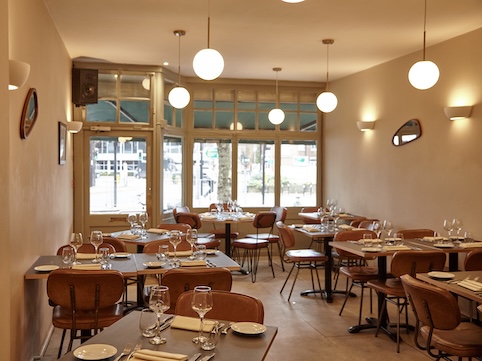
I’d heard Mignonette was good, as one would expect from John McClements, a Michelin-starred chef, who runs the bistro with co owner Glen Toromeni, and his son James, but it is better than good.
The parade it sits on is not the nicest, despite being Richmond. An awkward roundabout had me going round twice before I managed to take the right exit and then, by a gift of fate, I found not only a place to park, but one just a few doors down.
We were a bit worried that at 7pm on a Tuesday the place would be empty but not a bit of it. It’s already almost ‘complet’ with more people coming in. Okay, it’s a small place to begin with (30 covers), but it’s good to see such busy-ness.
I like the decor immediately, leather seats and an intimate, friendly atmosphere. I can see the kitchen at the end, which seems no bigger than a wardrobe. I’ve had some of my best meals from such kitchens, ones where chef can reach everything without moving.
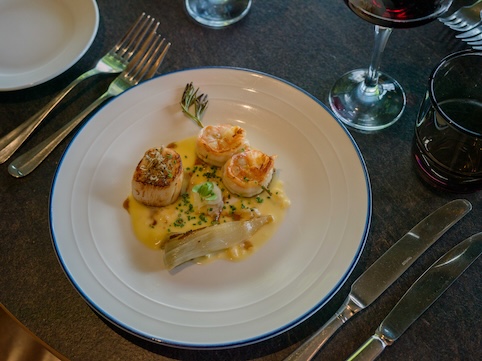
I take no pictures, I feel it would be a bit rude to do so. It really isn’t a place to ‘create content’. That said, every plate is gorgeously arranged as some random pictures I obtained from the restaurant testify.
So the menu, so many good things on it and immediately I see rabbit, hare and sweetbreads. Now that’s proper French food.
I start with Orkney scallop, perfectly cooked, which means introduced to the hot plate only enough to lightly caramelise the outside. A miso celeriac puree has a umami led richness that complements the scallop’s sweetness, whilst slivers of kumquat give sharp contrast.
A slice of maple bacon is a bit too chewy, I like my bacon friable. I also like the Sake beurre blanc. There are quite a few Oriental touches on the menu, see next paragraph.
Nothing says France quite like a terrine of foie gras, here the foie part is encased in ‘drunken chicken’, which is chicken poached and then soaked in Shaosing wine. My wife loves it, as well as the lovely duck fat brioche accompaniment. The mini preserved pine cones are something neither of us have ever seen before. Quite charming. Delicious.
Now you may not be a fan of foie gras, even fiercely opposed to it, in which case you probably won’t like what I have next: roasted Limousin sweetbread. This is, in case you don’t know, the culinary name for the thymus or pancreas, typically from a calf.It’s classed as offal.
It is absolutely gorgeous. Smooth and creamy and basted in a buttery caper sauce. A quenelle of perfect pommes puree plus cubes of aniseedy celeriac partner perfectly. I eat it very slowly.
What can you say about Cornish halibut roasted with red prawns and fresh crab crust, sauce bouillabaisse, saffron rouille? I’d eat the printed words. It sounds so good. And it is, P loved the prawns are perfectly plump and soft, and the halibut a white delight. The bouillabaisse is superbly rich from the slow cooking of fish components, or what you might even call scraps.
And that’s what I particularly like and admire about the cooking here- no ingredient is wasted. If a dish calls for one part of a vegetable or protein, the unused parts are repurposed into another. This is how a proper chef makes dishes affordable, while still making a profit.
We head into dessert and, whilst I always like the French habit of cheese then dessert, I pass on it today. Instead I have a tarte tatin made with pears, because it’s a classic. Gloriously sticky caramelised pastry, plus pears that are unctuously soft but also hotter than a care home in Hades. To be fair, the waiter does warn me about that. The cream laced with Calvados helps douse the burn.
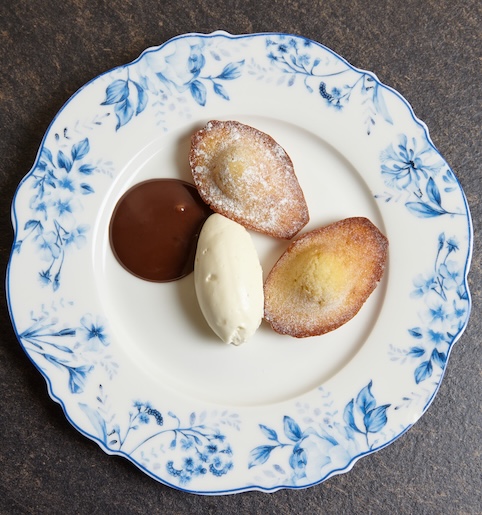
Baba a Grand Marnier for P. It’s not rum-laced, obviously, but the waiter brings a bottle of Grand Marnier to liberally soak the ring shaped savarin. The chantilly creme is classic and red fruits cut the sweetness just enough. I get a spoon and help drink the remains.
What a great meal. Classic French cookery done with practiced flair and a keen eye for making the most out of the best ingredients. All well priced too, and apparently even better at lunch.
Allez vite à Richmond sur Thames!


