Proper Parmesan Takes Its Time

If your cheap parmesan tastes terrible it’s because it’s not the real thing. I went to Parma to see how genuine, PDO protected, proper Parmigiano Reggiano is made and why it has a premium price tag.

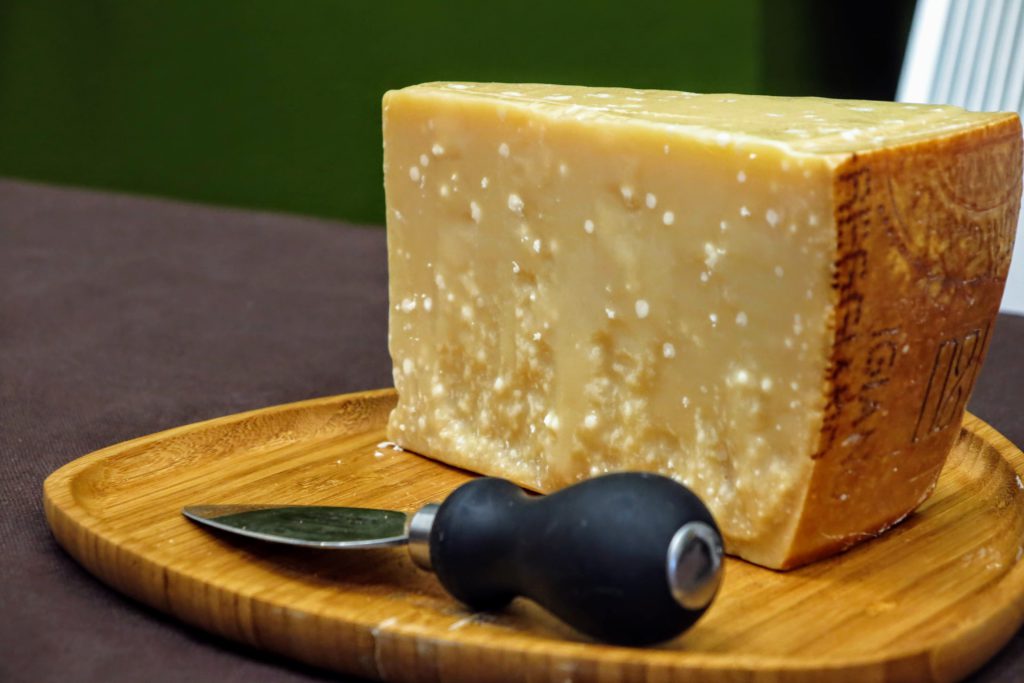
‘So this cheese is twelve years old,’ says Simone Ficarelli, the international marketing officer of Parmigiano Reggiano, expertly wielding the short, stubby, knife that’s the traditional tool used to break off chunks from the giant wedges.

There are white lumps in it, a distinct mark of a mature cheese. These are calcium lactate crystals, and are perfectly safe to eat. In fact the crystals in Parmigiano Reggiano cheese are a sign that the cheese has been properly aged. When you eat the cheese the crystals spark out a nutty flavour that complements the saltiness.
DOP Parmigiano Reggiano has been made for over 900 years and is only produced in the provinces of Parma, Reggio Emilia, Modena, Bologna to the left of the Reno river, and Mantua to the right of the Po river. This is the area of the farms where the cattle for the milk are fed on locally grown forage. It can only be made with this skimmed cow’s milk, salt, and rennet for curdling.
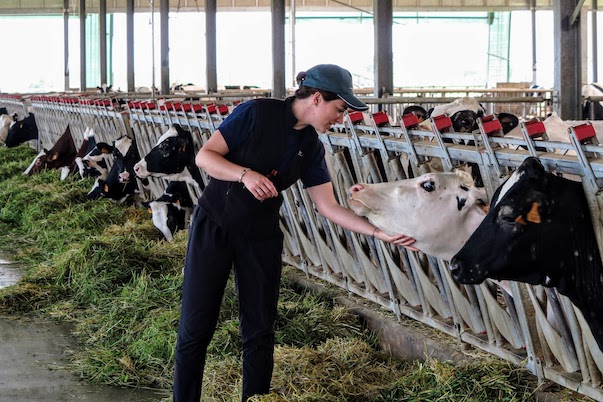
The cows live in airy open-sided barns, with extra fan cooling in summer, and they eat bundles of the lush grass that surrounds them. Strict rules ban the use of silage, fermented feeds and animal flour. They seem very happy, with plenty of room to move, and their waste is regularly pushed out and used for the farmlands. Water is carefully rationed for cleaning, no more than is necessary. This is an eco conscious process with rainwater collected from the giant roofs

Making milk into magic

TIn the dairy later, suitably attired in hair net and white coat, I learn more. Their milk then travels just a hundred metres to the next door dairy where, after being left long enough for the cream to rise and be skimmed off, it’s poured into traditional copper vats to be heated. It takes about 550 litres of milk to produce one wheel of Parmigiano Reggiano.

Rennet is added to curdle the milk and I watch the expert cheese makers sift the milk through their fingers to check the process. It’s a skill that a machine cannot emulate, only experience can work the magic.
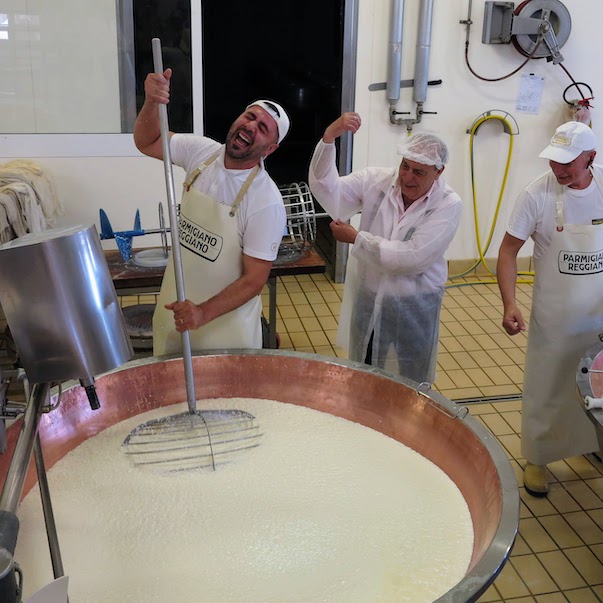
When the expert decides the time is right, a large ‘whisk’, a  traditional tool called a “spino”, is used to break up the curd into smaller pieces. It’s hard work but the men cheerfully put their backs into it. This isn’t just a job, this is a labour of love.

The cauldron is heated to 55 centigrade, and the granules slowly sink to the bottom forming a single mass. After about fifty minutes the large lump that’s formed is divided into two with a  large wooden paddle and these are lifted out in muslin bags. The remaining liquid, the aromatic whey, will be sent off to feed local pigs and give us delicious Parma ham.

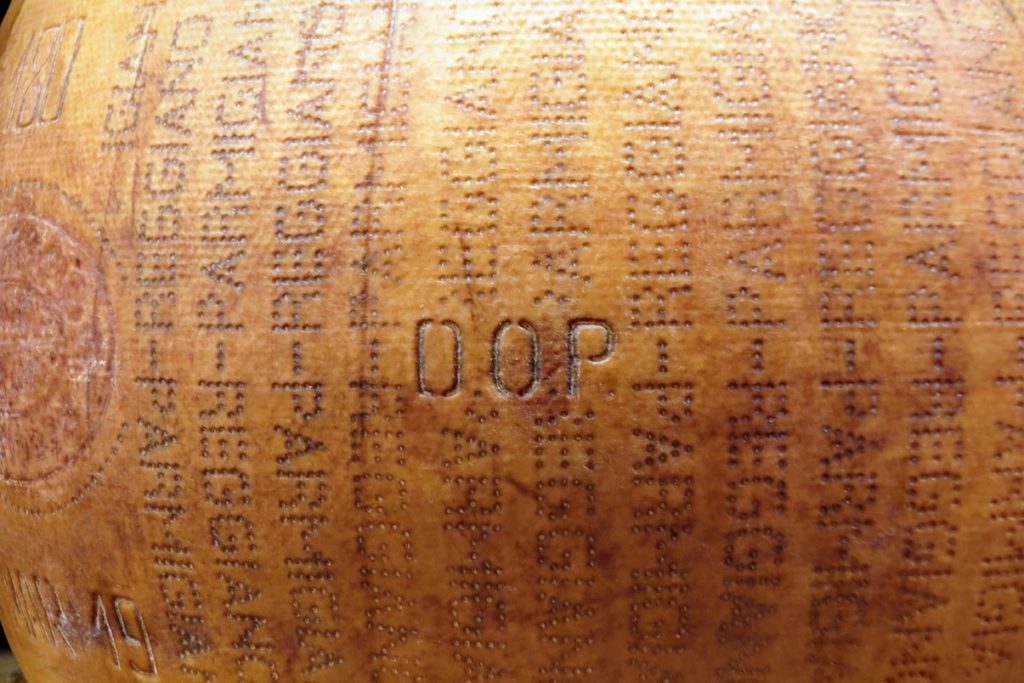
The next stage is to put each lump into the cheese moulds. These have a plastic lining embossed with all kinds of details of date, time and place, as well as a number that tells if the cheese was made in Reggio Emilia, Parma, Modena or Mantua 

This information embeds itself permanently into the rind as it forms, meaning the cheese has a ‘signature’ that’s impossible to fake or remove. Apparently though they are also experimenting with putting a microchip in the cheese to make it even easier to check provenance. As I say, there is big money in forgery and this product is so fine that the consumer has to be protected. 


The cheeses then head off for a relaxing salt bath for about three weeks. Here modern machinery is used to do the regular lifting and turning. These cheeses are very heavy at this point, being still full of moisture. In the old days it must have been very tough work.

Age is key
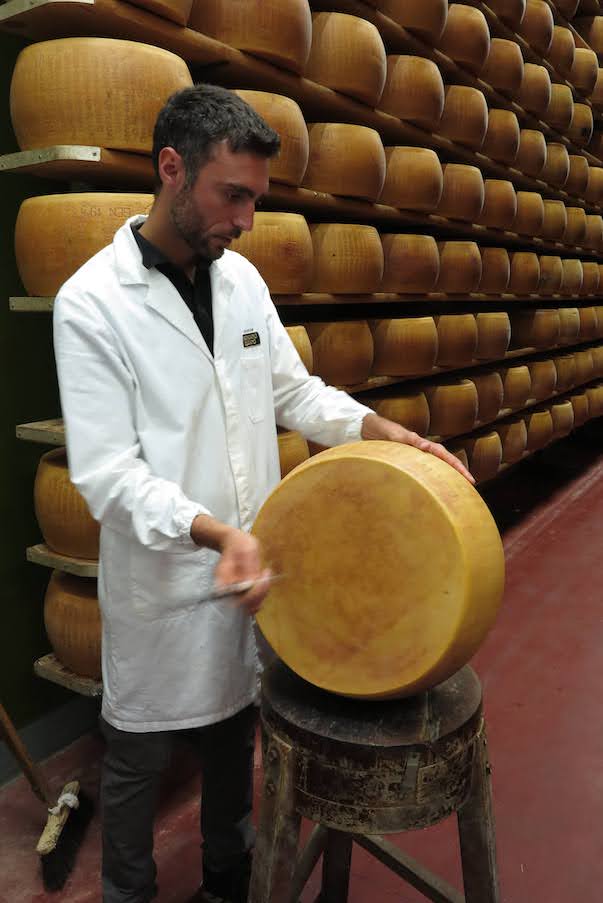
The cheeses once out of their briny bath are never aged for less than 12 months. At this stage the aroma is of fresh fruit, grass and flowers and the cheese is almost sliceable. After 24 months the crumbliness develops, while at 36 months spicier notes arrive. 36 months is usually the cut off point for general consumption, but some cheeses are pushed on to 48 which is a bit of a connoisseur’s cheese.

The cheeses are stored for all this time in vertiginous racks in massive temperature controlled rooms, and regularly tested by tapping them with a special hammer, as has been done down the ages.

The sound it makes is just a dull thud to my ears, but it tells the experts how well  the cheeses are maturing and any subtle tone variation will also reveal any fissures hidden inside the cheese. A fissure means the cheese, while perfectly good in every other way, must be rejected for sale as a whole cheese, the identifying rind will be removed and it will be broken up and used to make high quality ground Parmigiano Reggiano instead.

Cheese to please

The different ages result in cheeses for all occasions. The more mature being ideal for eating on their own as an aperitif, the irregular lumps really spreading the flavours onto the palate. Try some with a dab of honey and perhaps some walnuts.

Of course they are all delicious grated or shaved fresh onto salad or over pasta, but never please over seafood. Pasta with lots of butter, black pepper and grated Parmigiano Reggiano is a simple and delicious dish when made with such a quality ingredient.

It is of course delicious in a risotto, that final addition lifting all the flavours up

To keep a large block, which is a great investment, ideally wrap it in greaseproof paper, vac pack it, and put it in the fridge (never the freezer). It should be brought out to room temperature at least an hour before eating so the aromas and flavours reawaken.

If you have a large pestle and mortar then grate  Parmigiano Reggiano in, then add the best basil you can find, pine nuts, garlic and olive oil to make the very besto pesto.

So don’t just use Parmiggiano Reggiano for your spag bog! This versatile cheese has taken a long time to get to your kitchen, so take the time to make the very best of it.

#tasteofeurope #enjoyitsfromeurope #parmigianoreggiano #parmesan #euquality @parmigianoreggianouk
Swaledale Lamb. From The Dales to your door

If you don’t have a decent butcher on your doorstep don’t worry, you can still get the finest meat delivered

I don’t live in a ‘nice’ London postcode. Waitrose won’t set up shop anywhere near us and Ocado has an armed escort and throws the shopping at our door rather than risk stopping.

Well not really, but we do lack posh shops and the nearest proper butcher is many miles away. So we are at the mercy of the big supermarkets, and much as I like lamb, particularly at Easter, I have had too many expensive disappointments from supermarkets to ever buy it there again.

So Swaledale had me in interested with their talk of being an award-winning Yorkshire-based online butcher that works in partnership with small-scale, sustainable farms on The Dales. They specialise in heritage breeds of cattle, sheep and pigs, wild venison, and native game birds, supplying many a top restaurant.

The Dales are particularly noted for sheep farming, with hardy breeds such as Swaledale, Lonk, Dalesbred and Herdwick all foraging freely on the lush grass, herbs and flowers. The result is smaller, darker-fleshed lamb that tastes of the ‘terroir’, although I suspect many down to earth Yorkshire people would gag at such fancy French talk.

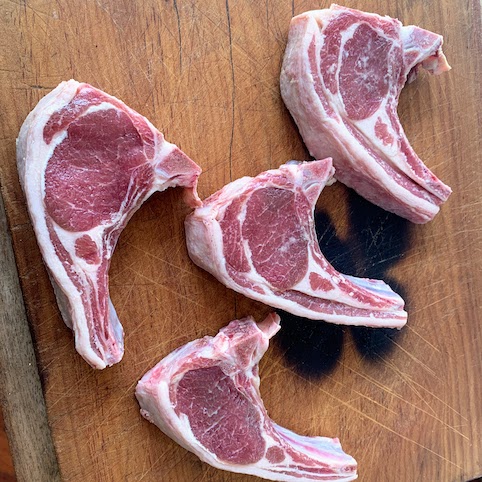
So we tried out some of their lamb by post. Lamb chops, because a perfectly cooked lamb chop chewed off the bone is one of life’s’ great pleasures. We also chose some Merguez sausages because we were intrigued to taste a Yorkshire merguez. Another great pleasure is eating merguez slapped into a buttery baguette, a staple snack at every French bric a brac market and always served with a barquette of freshly cooked from frozen frites and glass of raw vin rouge.

And just for ‘fun’ we also had some mutton chops. A lot of people give mutton a miss, it’s regarded as a bit old fashioned and can also be a bit too ‘gamey’ for modern tastes, but good mutton is well worth seeking out.

The lamb chops were excellent. The plan was to grill them on our new Weber, but while I factored in the weather I forgot it gets dark at 6pm, so we cooked them on a cast iron grill on the kitchen gas rings. Three to four minutes a side with the grill hot as Hades, the internal temp checked with the trusty Thermapen – overcooking lamb is a criminal offence, or should be.

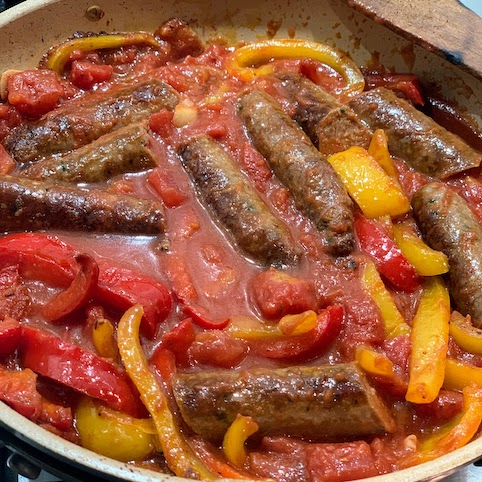
The Merguez were the best I’ve tasted outside North Africa, quickly frying to an attractive gold colour and with a firm snap to the skins. We ate some cooked with red peppers dobbed with a poached egg, and the next day sliced into pieces in a couscous. My suggestion that we should also have them for breakfast was vetoed.

Finally the mutton chops. For these we thought we’d be a little adventurous and used the recipe from the take it easy chef for mutton chops karnatkas style. This involved pressure cooking the chops in some water and spices before adding a masala mix and simmering for twenty or so minutes.

Indian cooks use pressure cookers a lot, they’re fast and energy efficient. Here the cooker turned the meat very tender without taking hours of slow cooking. Lots of flavour and an authentic taste.

So we were impressed with Swaledale’s lamb. As traditional quality butchers become harder to find, and hard to afford, mail order meat is certainly a great way to go.

swaledale.co.uk


Yee-Hah! I sample SOUND London’s brand-new Americana menu

I’m not normally a fan of stereotypical American food, but I get kinda converted at a lavish preview

American food is often defined solely by the UK’s rather twisted lens. Watching TV we tend to think that all Americans ever eat is steaks bigger than plates and burgers so enormous you need to dislocate your jaw like an anaconda to fit them in.

Of course that’s not entirely unfair. Americans do things big and that includes food.

SOUND London is a very big space inside the Cumberland Hotel, so large it’s even got a London taxi in reception.

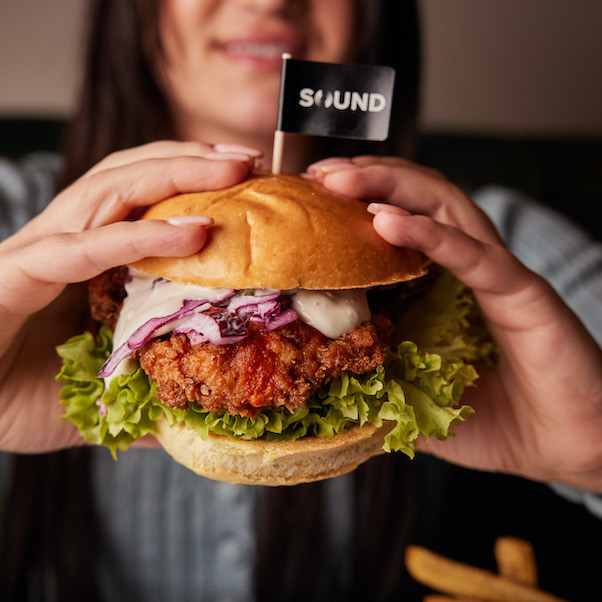
Walking in is like entering a classic bar in Florida, it’s all very colourful and bright and packed with people, and on the stage is a band. This is the kind of place usually called a Sports Bar where giant TV screens beam the big games with state of the art sound sound systems, and have live music at other times. The food is equallyloud and proudly Comfort American,

SOUND London at The Cumberland Hotel in Marble Arch now has a brand new Americana menu with lots of small plates, burgers, BBQ meat platters with sharing sides and gravy, and the mighty 20oz Tomahawk steak for sharing served with mash, chilli greens, baked tomato topped with a garlic and herb crumble, as well as salsa verde and red wine gravy.

So I starved myself all day in anticipation.

We skirted around the sweet little robot server trundling cheerfully up and down, and nabbed a table in front of the stage where an acoustic trio were competently playing all the hits and more. Rather oddly the two seat tables are arranged so one of you has his or her back to the stage, it would be better surely to have seats side-on so you both can see?

The menu is not massive ,but it certainly inspires big hunger. We had a cocktail each and were undecided for starters between Stuffed jalapeño poppers, Jumbo prawns with spicy mango salsa, Grilled corn ribs, Buttermilk Chicken Tenders and the ‘Ultimate Onion Ring Tower’.

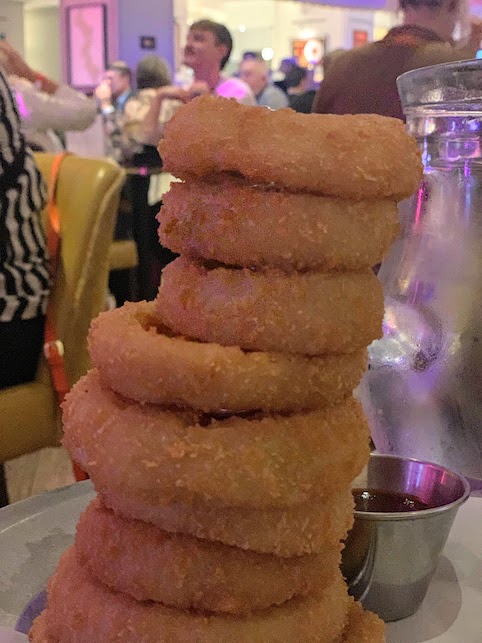
We had the peppers and the prawns and also succumbed to our server’s insistence to try the onion tower – well, when in the U.SA etc.

The peppers were great, ideal for accompanying drinks, ideally ice cold beers. The prawns fat and juicy, the batter crisp and fresh. And the onion rings? Well these were impressive and certainly towering.

They were also extremely, deadly, hot. We both had serious problems through taking too big a bite, the batter burning us and the onion inside annoyingly reluctant to be bitten through. We decided to let them cool down and concentrated on our other dishes. If your kids order the tower, and this is a kid friendly place, be careful.

We wanted the Tomahawk steak to share, who wouldn’t, but apparently it’s marinaded in red wine and J is allergic to tanins. We agree to share the The Smokehouse Platter instead – BBQ-glazed smoked beef feather blade, pulled pork shoulder, glazed pork ribs, Texas hot link sausage, grilled corn ribs, BBQ ranch beans, red cabbage slaw, pickles and tear ‘n’ share mezzaluna bread.

It’s brilliant, a real feast of America. The ribs fall apart perfectly, the shoulder easily falls to the fork and we devour it all hungrily as the band lurches into an acoustic version of Oasis’ Stand By Me.

Anyone not on the red meat train could go for the Big Bird Platter -BBQ-glazed skin-on chicken breast, slow-roasted chicken wings in a choice of BBQ or Buffalo Hot Sauce, buttermilk chicken tenders, grilled corn ribs, BBQ ranch beans, red cabbage slaw, pickles and tear ‘n’ share mezzaluna bread and it looks good,.

Sounds Big Burger

And if you want a burger well fear not because the Burger Studio has The London Double Decker, crispy buttermilk chicken Clucky and smokey BBQ Pulled Pork. And they are biggggggg!

We watch them go past rather wistfully, as we are now sated, and just about manage a House Apple Cobbler, and a thick Millionaires Brownie. We are stuffed and then some.

Take me home, country roads. Or rather, take me home Northern Line. I did enjoy our visit to America.

 https://sound.london/

@sound.london 

Great Cumberland Place, Marble Arch, London, W1H 7DL 

For more information please visit: https://www.guoman.com/the-cumberland  

#HITPLAY 

Seaweed – A Collection Of Simple And Delicious Recipes by Claudia Seifert, Zoe Christiansen, Lisa Westgaard & Hanne Martinsen

Take off your socks, roll up your trouser legs and wade happily into the world of edible seaweed.

Bladderwrack, Oarweed, Thongweed, Dulse, Laver and Winged Kelp. No, not the names of a new bunch of Marvel superheroes (and haven’t we had more than enough of them by now?) but the names of just some of the seaweeds we should be chowing down on.

Because they are super in themselves – rich in nutrients, sustainable and environmentally friendly. And tasty, let’s not forget tasty.

This immaculately produced book, translated from Norwegian, is not only beautiful to look at, but packed sardine-like with great and frequently beautiful recipes, simple to prepare for single meals or family feasts.

Main courses, snacks, soups, salads and desserts. Vegetarian and with seafood. Plus, some experimental type dishes of tapas, too.

Getting hold of seaweed doesn’t mean having to actually head down to the seashore, although the authors do have guidance for doing so safely and respecting the seaweeds’ sustainability (taking a large pair of scissors is a must). And they do encourage you to do so.

In fact, most seaweed is sold dried, either in specialist shops or online, and has to be soaked at home where it almost miraculously unfurls into large and juicy green leaves and tendrils. The book has a list of useful seaweed stockists at the back.

Seaweed delivers umami, which is why it’s such a favourite ingredient in Japanese cooking and it is also a source of salt. It has few calories or carbohydrates, is low-fat but rich in protein often with minerals such as calcium, magnesium and potassium, as well as amino acids and trace elements.

So, what can you make? Well for a start and for starters there’s classic miso soup of course. Or how about an omelette with peas, feta cheese and sea lettuce? Salmon with coffee, chili and winged kelp sounds delicious too.

It adds flavour to a vegetable stock and will raise up your bowl of ramen. Add it to a quiche along with spinach, wrap it around cod and slow cook for a fish that truly tastes of the sea.

You might also want to browse this delightful book with a Gin seaweed tonic, seabelt Martini in your hand, the recipe is here too.

Each photo is a work of art, none of your tedious top down stuff so beloved by Instagrammers, these are proper professional images that would look perfect framed on the wall.

The whole book is an eye-opener and more than enough incentive to head for the beach

ISBN: 9781910690512. Published by Grub Street

£20.00