Of palaces, pastries and pesto

Take a short break in Genova, the city of staircases with a charm uniquely of its own.
Christopher Columbus would not be pleased to see what’s become of the house he was born in. In fact, it’s not actually his original house at all but a reconstruction. The original was shelled half to bits by the French in 1684, and then finished off in 1900 by Genovan town planners.

It seems rather rough on the home of the city’s most famous son, but you soon realise that Genovans are not overtly given to sentiment. It’s a tough and gritty town on the surface, but with a soft centre made of pastries and pesto.
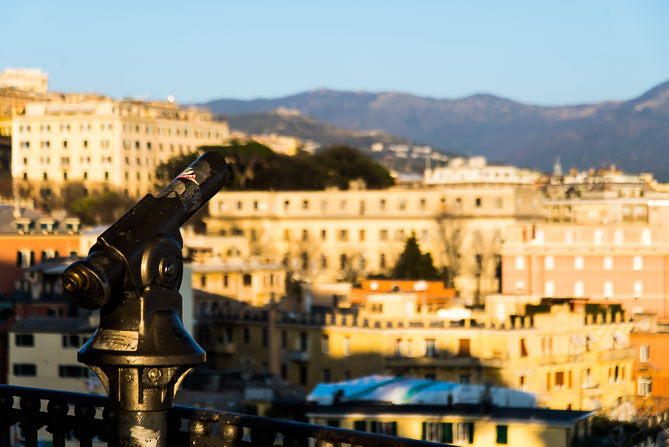
As you fly in, you see how Genova rises steeply from the sea, climbing hand over hand up the Ligurian mountains. At its base is a tangle of alleyways and ancient overlapping buildings that lean together for support, and thankfully leave little space for cars.

The town is hard-working and constantly in motion. It made shiploads of money back in the day from world trade, and the palaces that were built from the profits are grand and numerous. Some are now offices but many are fine museums while others are mutating into cool bars and antique shops.

Before heading off to explore the alleys, I stopped for lunch at Eataly on the docks and a seafood restaurant called Il Marin with fine third-floor views of the town.

Chef uses local produce and food is light and very good for the money. I had Mackerel ‘Giudia Style’, then spaghetti riddled through with local small, pink, tasty squid with spring onions, and followed that with Venchi dark chocolate and pear and coffee.

Heading into the dark mediaeval alleyways after was like entering catacombs. Often the only clues to the presence of the modern world outside being air conditioning units hanging precariously on walls and glimpses of sky far overhead.

Many of the ‘botteghe storiche’ or historic shops here have been trading for 200 years, and include confectioners, tailors, bakeries and butchers. I fired down a fast expresso at a tiny place called Tazze Pazze, said to have the best coffee in Genova and pressed on deeper.

A small ancient tripe shop, Tripperia La Casana, with marble tables seemingly unchanged since forever, had an aroma that had me heading straight back out again. Their tripe stew is very popular, but it’s not for me.


Ah but chocolate, yes please. Viganotti is a tiny shop that has made and sold chocolates since 1886. Peer past the owner’s mother, on stern guard at the old wooden counter, and you can glimpse belt-driven ancient machinery grinding and mixing. Each piece is different, not mass-produced, and delicious.

Not to be missed whenever you see it, and you see it a lot, is the Genovan focaccia. a regional specialty (fugassa in the Ligurian dialect). Thinner than usual focaccia and crispier, Genovans love it so much they will even dip it into their coffee the way we do digestives


Head for the Focacceria San Lorenzo where they sell by weight; the Focaccia di Recco, is the one to definitely try – two very thin layers of dough sandwiching fresh cheese that melts in the fierce oven heat.

It came in handy for energy as I began to labour up the inclines. Puffing up one particularly steep slope, I was overtaken by a young Genovan mother pushing a loaded double pram with one hand while having a phone conversation with the other. She made it look easy, while I stopped and had a conversation with my shoes for a short while.

Luckily the Genovans have, over time, found their ‘vertical city’ a bit challenging as well, and have done something about it with elevators and funiculars.

Next to Genova’s main rail station, you can take the Montegalletto elevator built in 1929 and modernised in 2004, to reach the Castello D’Albertis, a bizarre neo-gothic castle now a museum built by a wealthy 18th Century citizen to show off his collection of world artefacts gathered from his travels.

Coming out of the elevator you immediately feel a fresh breeze and light floods the pretty gardens. No wonder the wealthy lived high up in this Montegalletto district and looked down on the docks below.

Walking back down, I headed for the Via Garibaldi which is not the home of the biscuits, but the site of many grand Rolli palaces and a UNESCO World Heritage Site, to take a peek at some Rubens, Van Dykes and Caravaggios.

Some serious shopping can be had on Via XXV Aprile, via Roma and Galleria Mazzini, all close together, but I had an appointment at another palace, this a charmingly semi-restored one for the Pesto experience at the 16th Century Palazzo Imperiale

Genovans firmly believe their basil is the only one for pesto. The sea air permeates the plant, they say, giving it a unique flavour and every Genovan has a pot or two on their windowsill.

Recipe: pinch out a good handful of leaves, put in a marble pestle and mortar with a sliver of garlic and some salt and pound to an aromatic paste. Then pound in pine nuts, pecorino cheese and Ligurian olive oil. Presto, you have pesto.

Interestingly, the law now allows passengers to take a 500-gram jar, or two 250-gram jars, in hand luggage when flying out of Genoa. They must be flying directly from Genoa though, and the pesto must be from Genoa.
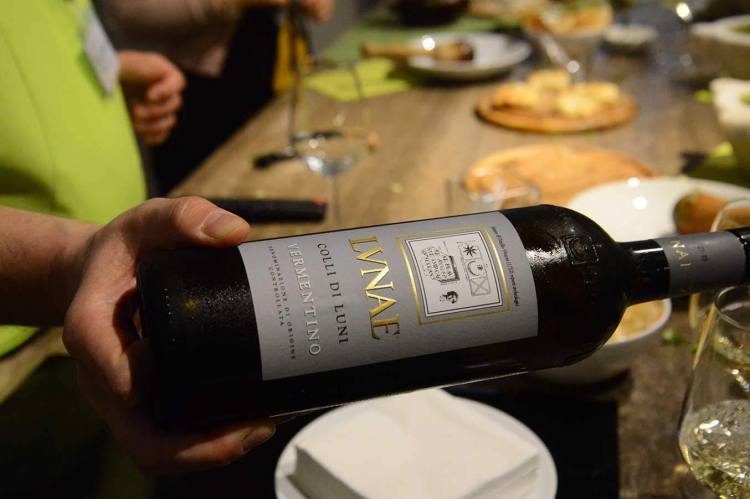
I ate my pesto on some focaccia, washing it down with clean, sharp, Vermentino one of Liguria’s most famous white wines.

Downstairs I quickly checked out a seriously Hoxton-vibe cocktail bar Les Rouges,  set in the elegantly decaying grandeur of a suite of what were once the frescoed family rooms. Definitely a place to come back to in the evening.

Of course, Genova has an historic food market, and what a market it is. The Mercato Orientale is not an oriental market, it means East in Italian, but one crammed with the freshest produce of Italy and of course bushels of fresh basil.
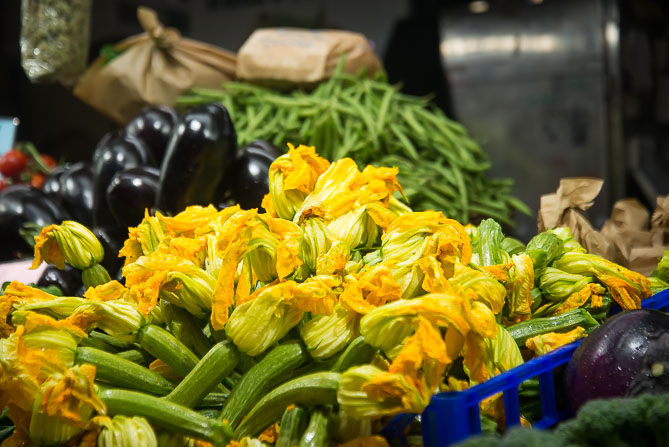
Soon you’ll be able to satisfy your aroused hunger pangs there too as the centre is being converted to a kind of food court, where around 14 restaurants will be cooking up a range of dishes from Michelin to street style.

To eat up the rest of the afternoon I headed out of town to Boccadasse a short ride away. It is picture perfect, even on this rather stormy day, and in fact all the better for being out of season as you get a true feel for the place wandering its now empty alleys.
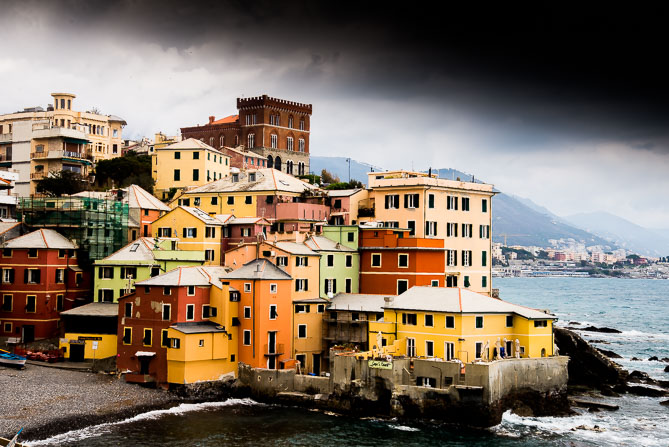
Peering into Ittiturismo Boccadasse a seafood restaurant on the beach, I could see Italian families crammed shoulder to shoulder throwing down the specials caught that morning locally and written up on a blackboard. Prices were a lot cheaper than Portofino up the road and the food looked fresh, rustic and honest.

I’d been told Le Rune was a good restaurant for an evening meal. Like so many places in Genova it was on multiple confusing levels and seemed to wander from building to building. Clambering to the highest level I was surprised to find I was actually on the same level as another street.

Food was excellent, deceptively simple but based on seasonal vegetables and a deft hand with classics such as spaghetti vongole, the shellfish sweet and generous.

Next day was a time for checking out Genova’s other attractions, such as the famous aquarium, the Galata Museo del Mare and Palazzo Ducale which houses some of the city’s most important artworks.

But the alleys drew me back for a poke around classic tailors, for glimpses into carnal butchers and blissful bakers and to buy a great big gelato from the famous Cremeria Buonafede in Via Luccoli.

I did eye up the “panna montata” (whipped cream) but you have to draw the line somewhere even in Genova. Maybe next weekend.

Genova Facts

Thanks to @GenovaEventi and @genovamorethanthis  the Municipality of Genoa, the Chamber of Commerce Genova and the Genoa Tourist Offices www.visitgenoa.it

Get there:

BA (ba.com) flies from London Gatwick to Genoa with return flights starting from £86.72 including all taxes, charges and one hold bag.

Stay:

Hotel de Ville Down on the front. Comfort rooms start from 143 Euros per room per night based on two sharing and including breakfast and city tax

hoteldeville.it/en/

Hotel Bristol Palace A grand old style hotel in town by the railway station. Classic double rooms start at 204 Euros per room per night based on two sharing and including breakfast and city tax

www.hotelbristolpalace.it/en

Hotel Valery A boutique guest house located inside Palazzo Montanaro. Double rooms start from 78 Euros per room per night based on two sharing and including breakfast.

www.valeryguesthouse.com


Romulo Cafe Restaurant Review

343 Kensington High Street London, W8 6NW www.romulocafe.co.uk

How often have you heard someone say, ‘I know, let’s go out for a Filipino? Probably about as often as you’ve heard someone say ‘I fancy a bit of German food tonight.’

Filipino food is, let’s be honest, not a cuisine that has had much exposure. You’re more likely to find a chef from the Ukraine on Saturday Kitchen than one from the Philippines.

So Romulo Cafe is intriguing.  It’s a branch of a small group, there’s also a Romulo Café in Quezon City, Makati and Alabang in the Philippines.

Located in a rather unprepossessing part of West Ken, next to one of those all-night grocers that has everything anyone from any culture could ever want, it’s actually a lot nicer inside than you might expect. Cosy, even. Continue reading

Farzi Cafe London

8 Haymarket, London SW1Y 4BP www.farzilondon.com

They apparently spent £4 million doing this place up, but Nick feels they really needn’t have bothered as the food sells itself

Four million quid?  It’s easy to see where £250,000 of it might have gone – the fancy bar, the metal room dividers, the tables and chairs – but £4 million?

It’s like when the Met police say it cost them XX million to police a small demonstration, you’d think someone in charge really should ask to see the receipts.

Still, whatever, it’s definitely an opulent space at Farzi Cafe which is in that stretch of Haymarket where both high and low restaurants vie for their share of theatre-goers’ dinner money.

It’s part of the empire of Indian MasterChef judge Zorowar Kalra, who began in India in 2014 and now has around ten Farzi locations there, as well as one in Dubai. Continue reading

Restaurant Interlude, Leonardslee Gardens, Horsham

Nick leaves the protective embrace of the M25 to find fine and fun dining alive and well far from the madding crowd.

Reading the London-centric restaurant reviews in the big papers you’d think there was nothing much going on outside Zone Five.

Apart from, of course, on those occasions when the writers have been on holiday, at their second homes or visiting relations, and so have reviewed any half decent local place so as to get their travel costs back on expenses.

You might also think fine dining/tasting menus had all but disappeared in favour of things bunged in a fire or pickled in a jar.

Londoners, well at least the younger ones at least, can be a bit snotty about tasting menus. I think it’s a subliminal fear of cutlery and napkins, as well the potential horror of eating just as a couple with no sharing plates or long tables to distract you, only the ‘phone. Continue reading

Doing Breakfast At Market Halls Victoria

Looking for somewhere to grab a breakfast in Victoria, Market Halls now has plenty to tempt you. I got out of bed and got in.

The last time I went to the building that is now Market Halls Victoria, it must have been around 2004 it was the club Pacha.It was a place to be seen back then, a classy club so close to the bus stands at Victoria that the smell of diesel fumes vied with the Paco Rabanne.

Well look at it now, it’s a fancy food hall and part of the Market Halls group. Daylight, which never dared intrude at Pacha, floods onto the first floor from a massive glass roof. Up there are more food outlets not open until lunch. Continue reading

From little acorns – how the finest jamon is created

While we are all still on a plant based diet kick right now, there is still room for meat that is ethically and responsibly sourced, traditionally made and totally delicious.

Away in the distance, under the hundreds of Spanish oak trees, large dark shapes are moving. An occasional grunt or squeal drifts our way and Antonio Hernández of the Dehasa ‘Los Pinos’ answers back with strange noises.

The black Iberian pigs prick up their ears, or they would if their ears weren’t so charmingly floppy, and a mob begins to move toward us. Continue reading

Catching Up With Hastings Fish

Nick heads down to Hastings to do a bit of fishing for Xmas recipes and discover more about fish

Hastings sea front

Storm be a brewing

The wind and rain are lashing the Stade on Hastings’ seafront by the Old Town, with people being almost bowled over as they move between the ancient black net sheds and the spanking new Jerwood art gallery on the beach.

I have my head firmly down and my coat wrapped tight around me, my glasses are so covered in moisture that when I do look up it’s like being in a blurred psychedelic light show. Where am I? I ask in desperation, to no one in particular.

A passer by takes pity and directs me to my destination, the Classroom on the Coast on the Stade. Pushing open the heavy door and sliding inside I’m suddenly out of the elements and I feel as happy as a fisherman who’s managed to get below deck in a Force 10.

Which is apt as there is an old fisherman waiting inside; John ‘Tush’ Hamilton is one of the last of the Hastings fish ‘hawkers’. Continue reading

Going out for a beer, or several, in Slovenia

There’s a burgeoning beer scene in Slovenia and some wonderful scenery too. Nick sees if something can successfully be organised in a brewery.


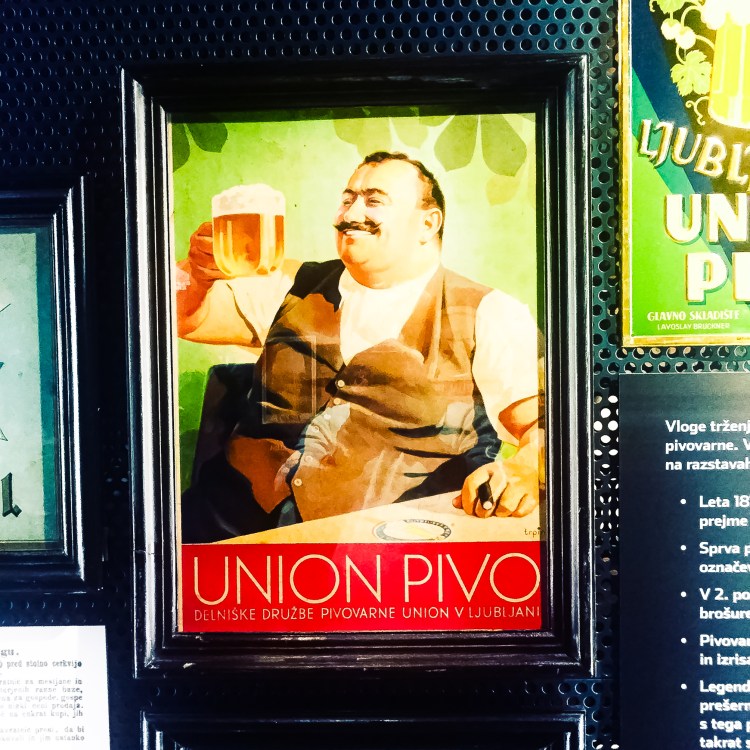
The men in the ‘pub’ of the Union Brewery in Ljubljana are in fine voice tonight. As a woman cranks rousing tunes out of an accordion that’s almost as big as she is, they roar out the choruses whilst waving mugs of beer to the beat.

It’s all sung in Slovenian of course, so I have no idea what the words mean, but I’m happy to raise my own glass and cheer loudly at the end of each song. The conviviality meter has gone off the scale here in this packed bar/restaurant.

Also off the scale is the platter of meat in front of me featuring slabs of pork, tangles of spicy sausages, juicy spare ribs and more all piled onto sauerkraut and baked potatoes. Continue reading

Delta Force

The eco-conscious Ebre Delta in Tarragona is unlike any other part of Spain. I took a few days to explore the rice, the food, the wine and even the sake.

DSC_6624

Paella is taken very seriously in the paddy fields

‘In a few square kilometres, I can find everything I need to eat,’ says local legend Senor Polet, as his friend stirs an enormous paella in the kitchen.

Outside the ancient house, a barraca style that’s typical of the area, the paddyfields of the Ebre Delta stretch away, stopping only at the base of the distant mountains in one direction and the nearby Mediterranean sea in the other. Continue reading

Tack For The Memory. Sweden On A Plate

Forget fika, there’s more to Swedish gastronomy than coffee and buns. Nick takes the plane north to dig down into the food-rich region of Jämtland Härjedalen

Frozen lake near Östersund Sweden

The Sound Of Silence

It takes two airplanes to get to Östersund, the capital and only city in Jämtland Härjedalen. The final descent out of a clear blue sky reveals a countryside that seems more lakes than land, with the lakes still frozen in April and blanketed in thick snow.

The melt is beginning though and soon the locals will put away their skis, the area is famous for its skiing, and begin to cycle and hike through their forests and fields. The Swedish here love to be outdoors whatever the weather.

And they love to eat well, the region is dotted with over 200 artisan food and drink producers, as well as restaurants and chefs that take inspiration and ingredients from the land and water around them.  Self-sufficiency is real here, not a fashion.

Frozen lake near Östersund Sweden

The Frozen North

Östersund on the edge of Lake Storsjön is a lively, friendly place and geographically it’s celebrated as the very centre of Sweden. The bars and restaurants don’t compete for business, they share it and as I move around the town I find the same faces –  bartenders, chefs, shop owners and local food entrepreneurs lall waving cheerfully as they slip and slide on the snow.

All that Jazz

A cocktail in Jazzkoket in Östersund Sweden

Drink it or wear it?

In the centre of this centre of Sweden is Jazzköket, which means ‘Jazz Cuisine’ in English. Tucked away in a hidden courtyard, its open kitchen radiates heat and bonhomie and, typically for Sweden, there are all ages enjoying its eclectic interior design and delicious food.

From the bakery in the cellar comes out superb sourdough and chefs cook with beef from mountain cows, as well as ‘Fangsten’, which means whatever seafood has been caught and brought to them that day.

A bartender making a cocktail in Jazzkoket in Östersund Sweden

A Swedish Hipster?

Across the courtyard is a cellar bar, where the team create esoteric cocktails based on local ingredients and invite guests to choose their own music from a stash of vinyl in the corner.

Having a browse, I find the oeuvre of Saxon features strongly, Swedish men may all look like Hoxton hipsters but they do like ‘the metal’ all the same.

The hip bartender makes up a selection of cocktails for me to try, including a marvellous one made with moss and a food dish whose name is tongue twister, but with its salty fish roe totally blows me away with its depths of flavours and sheer Swedishness.

a dish of salmon, potato, carrot and dill at Lilla Saluhallen

It doesn’t get much more Swedish

Although for a classic Swedish lunch you’d be hard pressed to find better than the salmon, potato, carrot and dill I happily eat at Lilla Saluhallen later, a delicatessen and casual restaurant combined and run by the partner of the man who runs the Jazzkoket bar.

The menu board at Lilla Saluhallen in Sweden

It was all Greek to me

In her well-stocked shop of local produce, I taste some superb cheeses that came from Oviken Ost,a nearby dairy that makes its artisan cheeses from cows and sheep with the milk either from their own herd or sourced locally.

So, good was the cheese that I have to meet the makers, so I drive up to the dairy in blazing sunshine and blue skies that belie the 5C temperature outside.

A cheesemaker in the dairy at Oviken Ost Sweden

Say Cheese

‘We couldn’t get the sheep’s milk we wanted at first,’ I’m told as I am shown around, ‘so we began crossing Nordic ewes with purebred East Friesian dairy rams’. They have over 90 acres and 200 hectares of managed forest around them and the whole dairy here is eco-friendly with heat coming from a wood chip boiler that uses wood from their forest. The cheese they make is so good it’s served at Magnus Faviken’s restaurant not far away, as well as at Noma.

Cheese platter in Sweden

Delicious on crispbread

The milk is left unpasteurised to get every bit of the flavour out and the cheeses, which range from hard to soft, are a real treat. This is how cheese ought to taste all the time.

Pork matters

‘They look like Rastafarian pigs,’ laughs the chef at Slaktarn i Östersund AB, ‘they have long furry coats’.  I’m looking down at perhaps the finest pork chop I have ever seen on a plate.

As thick as an old phone book, it’s perfectly cooked and simply served with crisp apple shards and local artisan beers Jämtlands Steamer and Jämtlands India Pale Ale. Here with the latter they know better than to overhop and create refreshing brews that are balanced and very drinkable.

A pork chop in Sweden

Chop chop

The guys at Slaktarn i Östersund AB are young men driven by a desire for proper meat.  The animals come from local farmers who all focus on providing natural lives for their animals, all grown to proper maturity and fed naturally from what the animals themselves choose to eat as they wander about freely.

The soil is monitored for organic quality and slaughter is carried out to the most humane methods, with the meat then aged slowly and carefully. The result is meat selected by all the best shops and restaurants in the area. And yes, that includes that place Faviken again.

Ice age

Nick Harman fishing on a frozen lake in Sweden

The smallest fishing rod ever

Of course, if you really want to get fresh food, you need to catch it yourself. Which is why the next day I find myself lying face down in the snow peering into a metre-deep hole we’ve just drilled through the lake ice.

Ice drilling in Sweden

Just a few more feet to go

A thirty minutes ride as passenger, and for a glorious fifteen minutes as a driver, on a powerful snowmobile with local hotel owner and mountain rescue expert Richard, has brought me out to the middle of a giant lake where the guides brew our coffee on fires made from scavenged wood and proffer slices of cured reindeer to keep us fed until the fish bite.

Nick Harman fishing on a frozen lake in Sweden

Not dead, just fishing

The rod is tiny, I look like a garden gnome. I can see the fish when I peer down, but they don’t want to be caught. We pack up and motor to a restaurant a few kilometres away deep in the Sami, the indigenous peoples, land.

The restaurant Hävvi in Glen is part of the Tossåsens Sami village in the Oviken mountains 50 km from Östersund and chef Elaine is married into a Sami family. The Sami people have lived from, and with, nature since time began and sustainability is their natural way of life.

A large bearskin pinned to the ceiling suggests that their attitude to nature is also pragmatic.

We eat Sami appetisers, a platter of smoked and cured reindeer components – heart, tongue, liver, that sort of thing – and then smoked mountain char, sea buckthorn, fried angelica, mayonnaise with apple vinegar, roasted bone marrow, fried fish skin and cloudberries, a plate redolent of this part of Sweden.

Chef Elaine at Hävvi in Glen Sweden

Plating up the Elk’s nose

Then it’s tempered suovas with slow baked swede, spring vegetables, blueberries and creamed black chanterelle mushrooms and crispy elknose. Suovas is dry-salted meat smoked by the Sami over an open fire.

Crispy elknose is like pork scratchings, but a great deal tastier and we end with a palate cleansing sorbet made from cloudberries and sea buckthorn. It’s a meal that anywhere else would be served surrounded by pomposity, pretentiousness and with chef posing at the pass. Here Elaine just cooks the food she likes to eat, and it is excellent.

Drinking songs

Bottles of snaps at the Buustamon hotel Sweden

Snaps

The sound of singing is loud in the basement of the Buustamon hotel and we’ve only had a few drinks. Helan Går, roughly Chug It Down, is one song being belted out and I wish I could join in.

Snapsvisor (drinking songs) are popular with all ages and classes in Sweden and where better to get the tonsils twitching then in a distillery?

The exterior of of the Buustamon hotel Sweden

Where the Spirits live

Snaps is a shot of aquavit, an ingrained part of Swedish culture and in this charming hotel and farm, halfway up Areskutan and accessible only by a bumpy but fun ride in a snowcat, they make their own –  all the way from the mash to the bottle labels. Beautiful freshwater, lingonberries, elderflower and all kinds of local herbs and spices are used between spring and autumn, any other time the water is frozen solid, to make their range of snaps – Arevodka, Buustasup, and Hojt.

Cured meat platter on a lake in Sweden

Snow snacks

It took them a long time to get the distilling permit under Sweden’s somewhat draconian alcohol laws, and rather bizarrely you still can’t actually buy a bottle at the hotel. No matter, I wobble up the stairs to the restaurant to a superb dinner of local produce in the wood heavy dining room.

Jämtland Härjedalen has certainly left me singing inside my head, with its wonderful people, food, drink and of course fabulous scenery. This amazing region is a place I could very happily call home and I can’t wait to come back again.

Chef in Sweden

The foraging chef

Big takt (thanks) to:

The Jämtland Härjedalen Tourist Board

Visit Sweden

www.Jht.se

www.Adventuresweden.com

Buustamon Hotel

Copperhill Mountain Lodge

www.are.se

Wikners i Persåsen Hotel