Take a short break in Genova, the city of staircases with a charm uniquely of its own.
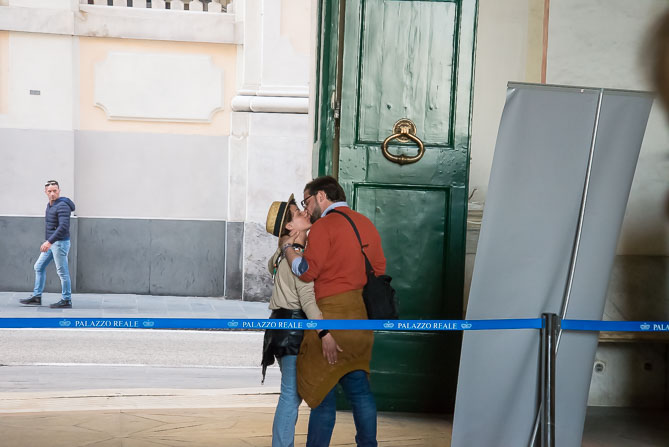
Christopher Columbus would not be pleased to see what’s become of the house he was born in. In fact, it’s not actually his original house at all but a reconstruction. The original was shelled half to bits by the French in 1684, and then finished off in 1900 by Genovan town planners.
It seems rather rough on the home of the city’s most famous son, but you soon realise that Genovans are not overtly given to sentiment. It’s a tough and gritty town on the surface, but with a soft centre made of pastries and pesto.
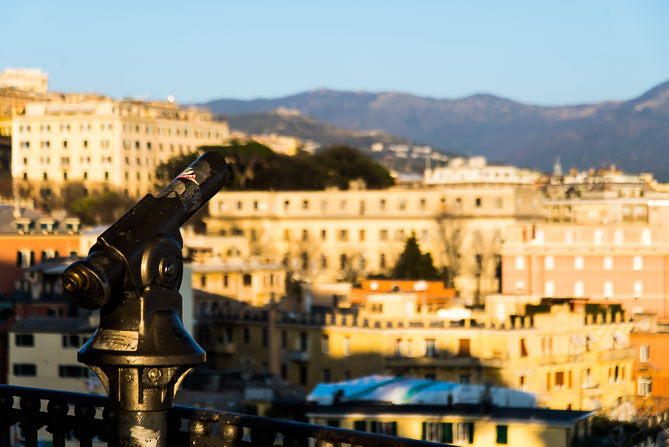
As you fly in, you see how Genova rises steeply from the sea, climbing hand over hand up the Ligurian mountains. At its base is a tangle of alleyways and ancient overlapping buildings that lean together for support, and thankfully leave little space for cars.
The town is hard-working and constantly in motion. It made shiploads of money back in the day from world trade, and the palaces that were built from the profits are grand and numerous. Some are now offices but many are fine museums while others are mutating into cool bars and antique shops.
Before heading off to explore the alleys, I stopped for lunch at Eataly on the docks and a seafood restaurant called Il Marin with fine third-floor views of the town.

Chef uses local produce and food is light and very good for the money. I had Mackerel ‘Giudia Style’, then spaghetti riddled through with local small, pink, tasty squid with spring onions, and followed that with Venchi dark chocolate and pear and coffee.

Heading into the dark mediaeval alleyways after was like entering catacombs. Often the only clues to the presence of the modern world outside being air conditioning units hanging precariously on walls and glimpses of sky far overhead.

Many of the ‘botteghe storiche’ or historic shops here have been trading for 200 years, and include confectioners, tailors, bakeries and butchers. I fired down a fast expresso at a tiny place called Tazze Pazze, said to have the best coffee in Genova and pressed on deeper.

A small ancient tripe shop, Tripperia La Casana, with marble tables seemingly unchanged since forever, had an aroma that had me heading straight back out again. Their tripe stew is very popular, but it’s not for me.

Ah but chocolate, yes please. Viganotti is a tiny shop that has made and sold chocolates since 1886. Peer past the owner’s mother, on stern guard at the old wooden counter, and you can glimpse belt-driven ancient machinery grinding and mixing. Each piece is different, not mass-produced, and delicious.

Not to be missed whenever you see it, and you see it a lot, is the Genovan focaccia. a regional specialty (fugassa in the Ligurian dialect). Thinner than usual focaccia and crispier, Genovans love it so much they will even dip it into their coffee the way we do digestives

Head for the Focacceria San Lorenzo where they sell by weight; the Focaccia di Recco, is the one to definitely try – two very thin layers of dough sandwiching fresh cheese that melts in the fierce oven heat.
It came in handy for energy as I began to labour up the inclines. Puffing up one particularly steep slope, I was overtaken by a young Genovan mother pushing a loaded double pram with one hand while having a phone conversation with the other. She made it look easy, while I stopped and had a conversation with my shoes for a short while.

Luckily the Genovans have, over time, found their ‘vertical city’ a bit challenging as well, and have done something about it with elevators and funiculars.
Next to Genova’s main rail station, you can take the Montegalletto elevator built in 1929 and modernised in 2004, to reach the Castello D’Albertis, a bizarre neo-gothic castle now a museum built by a wealthy 18th Century citizen to show off his collection of world artefacts gathered from his travels.

Coming out of the elevator you immediately feel a fresh breeze and light floods the pretty gardens. No wonder the wealthy lived high up in this Montegalletto district and looked down on the docks below.
Walking back down, I headed for the Via Garibaldi which is not the home of the biscuits, but the site of many grand Rolli palaces and a UNESCO World Heritage Site, to take a peek at some Rubens, Van Dykes and Caravaggios.

Some serious shopping can be had on Via XXV Aprile, via Roma and Galleria Mazzini, all close together, but I had an appointment at another palace, this a charmingly semi-restored one for the Pesto experience at the 16th Century Palazzo Imperiale
Genovans firmly believe their basil is the only one for pesto. The sea air permeates the plant, they say, giving it a unique flavour and every Genovan has a pot or two on their windowsill.

Recipe: pinch out a good handful of leaves, put in a marble pestle and mortar with a sliver of garlic and some salt and pound to an aromatic paste. Then pound in pine nuts, pecorino cheese and Ligurian olive oil. Presto, you have pesto.
Interestingly, the law now allows passengers to take a 500-gram jar, or two 250-gram jars, in hand luggage when flying out of Genoa. They must be flying directly from Genoa though, and the pesto must be from Genoa.
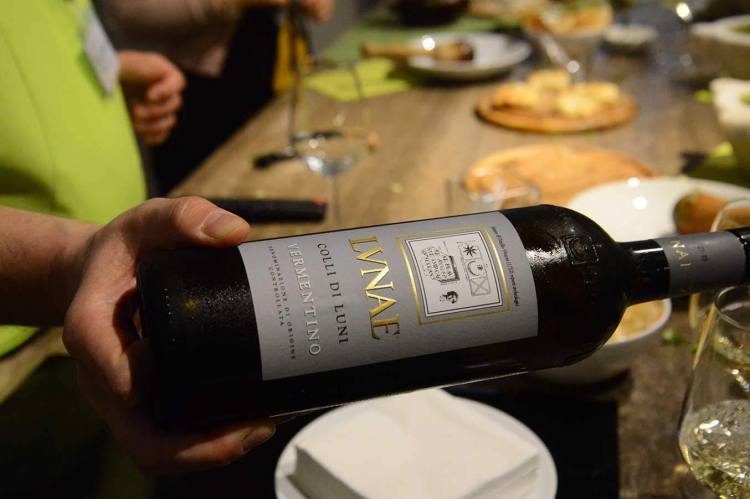 I ate my pesto on some focaccia, washing it down with clean, sharp, Vermentino one of Liguria’s most famous white wines.
Downstairs I quickly checked out a seriously Hoxton-vibe cocktail bar Les Rouges, set in the elegantly decaying grandeur of a suite of what were once the frescoed family rooms. Definitely a place to come back to in the evening.

Of course, Genova has an historic food market, and what a market it is. The Mercato Orientale is not an oriental market, it means East in Italian, but one crammed with the freshest produce of Italy and of course bushels of fresh basil.
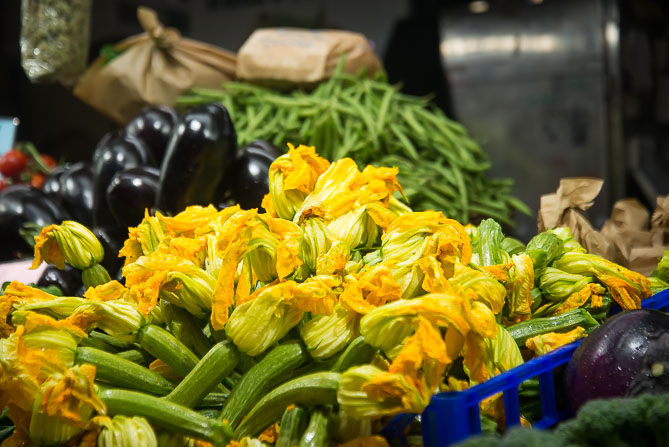
Soon you’ll be able to satisfy your aroused hunger pangs there too as the centre is being converted to a kind of food court, where around 14 restaurants will be cooking up a range of dishes from Michelin to street style.
To eat up the rest of the afternoon I headed out of town to Boccadasse a short ride away. It is picture perfect, even on this rather stormy day, and in fact all the better for being out of season as you get a true feel for the place wandering its now empty alleys.
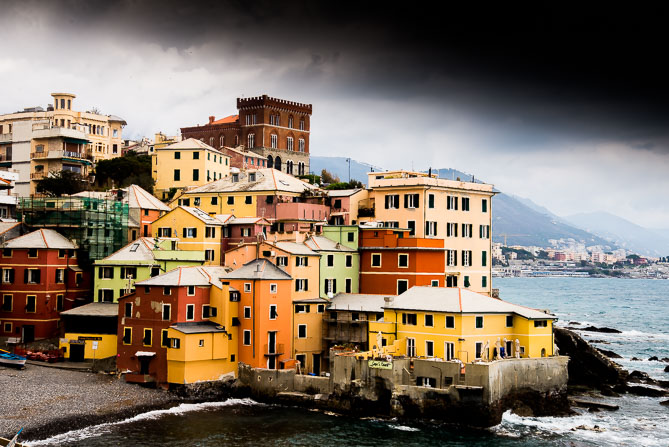
Peering into Ittiturismo Boccadasse a seafood restaurant on the beach, I could see Italian families crammed shoulder to shoulder throwing down the specials caught that morning locally and written up on a blackboard. Prices were a lot cheaper than Portofino up the road and the food looked fresh, rustic and honest.
I’d been told Le Rune was a good restaurant for an evening meal. Like so many places in Genova it was on multiple confusing levels and seemed to wander from building to building. Clambering to the highest level I was surprised to find I was actually on the same level as another street.
Food was excellent, deceptively simple but based on seasonal vegetables and a deft hand with classics such as spaghetti vongole, the shellfish sweet and generous.

Next day was a time for checking out Genova’s other attractions, such as the famous aquarium, the Galata Museo del Mare and Palazzo Ducale which houses some of the city’s most important artworks.
But the alleys drew me back for a poke around classic tailors, for glimpses into carnal butchers and blissful bakers and to buy a great big gelato from the famous Cremeria Buonafede in Via Luccoli.
I did eye up the “panna montata” (whipped cream) but you have to draw the line somewhere even in Genova. Maybe next weekend.
Genova Facts
Thanks to @GenovaEventi and @genovamorethanthis the Municipality of Genoa, the Chamber of Commerce Genova and the Genoa Tourist Offices www.visitgenoa.it
Get there:
BA (ba.com) flies from London Gatwick to Genoa with return flights starting from £86.72 including all taxes, charges and one hold bag.
Stay:
Hotel de Ville Down on the front. Comfort rooms start from 143 Euros per room per night based on two sharing and including breakfast and city tax
hoteldeville.it/en/
Hotel Bristol Palace A grand old style hotel in town by the railway station. Classic double rooms start at 204 Euros per room per night based on two sharing and including breakfast and city tax
www.hotelbristolpalace.it/en
Hotel Valery A boutique guest house located inside Palazzo Montanaro. Double rooms start from 78 Euros per room per night based on two sharing and including breakfast.
www.valeryguesthouse.com

 As I get older I find myself more and more doing that mindless humming thing, not even aware I am doing it, at least until I catch people looking at me with the ‘who’s the loon?’ expression.


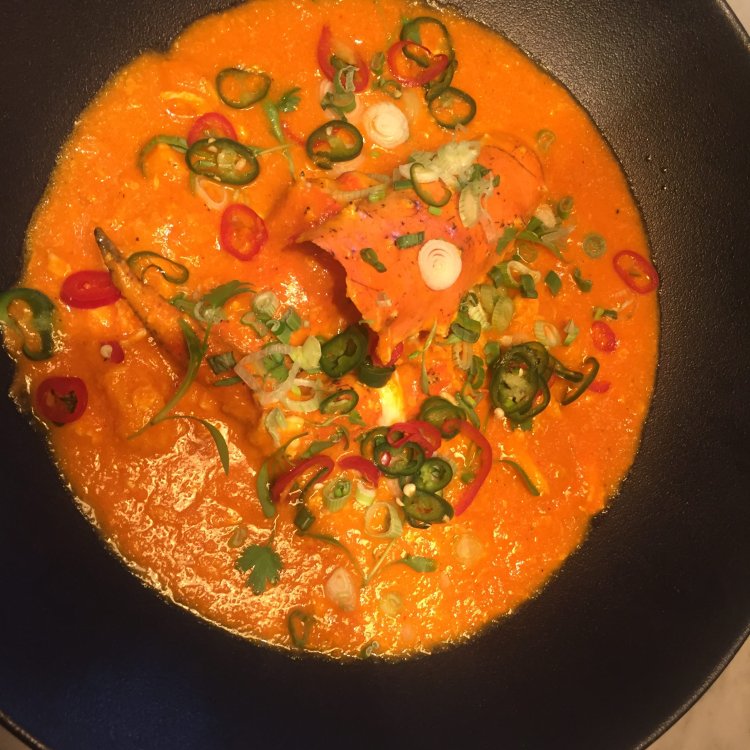

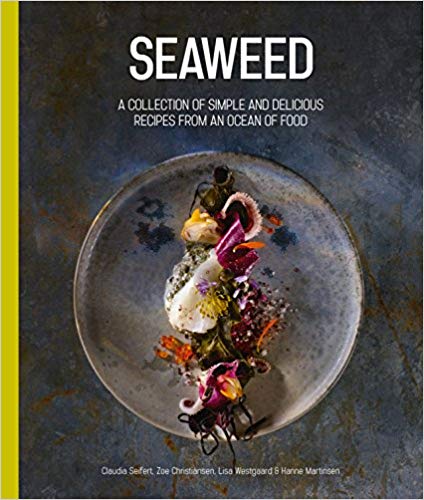 Bladderwrack, Oarweed, Thongweed, Dulse, Laver and Winged Kelp. No, not the names of a new bunch of Marvel superheroes (and haven’t we had more than enough of them by now?) but the names of just some of the seaweeds we should be chowing down on.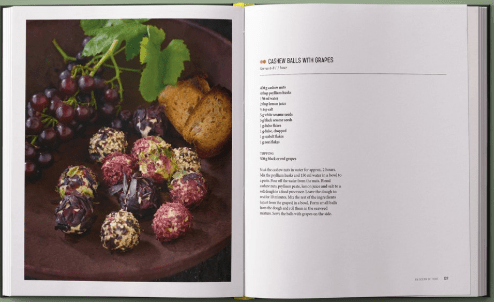
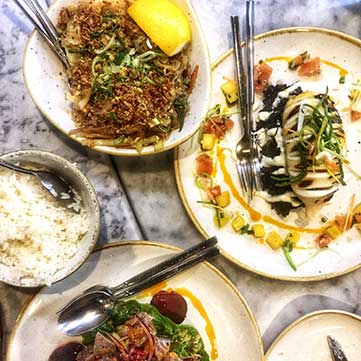 Filipino food is, let’s be honest, not a cuisine that has had much exposure. You’re more likely to find a chef from the Ukraine on


 The Culinary Traveller