Exploring Sicily’s DOC Wines: A New Age of Quality

Sicily DOC wines are exciting, fresh and a world waiting to be explored. I visit the island to discover a new age of quality that’s all in the family.
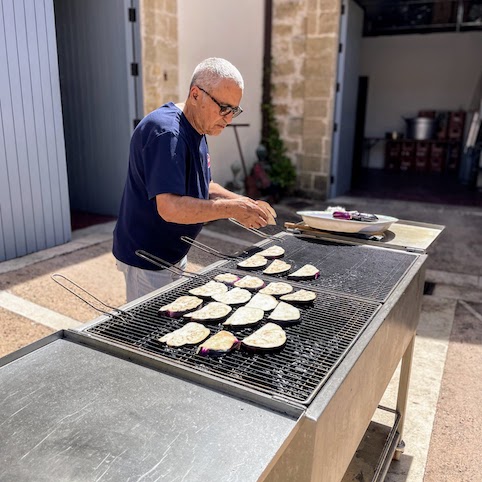
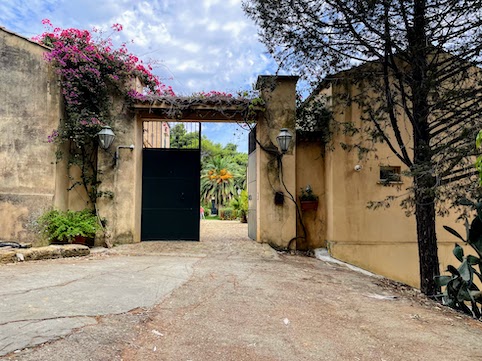
In the “baglio” or traditional central courtyard of Tonnio Baglio Ceuso, the father of the winery is frying aubergine slices and fennel sausages over glowing charcoal. The aroma is fantastic but, not speaking any Italian I can only give him a thumbs up and get one back with an accompanying grin.

Now semi-retired, he enjoys watching his descendants do most of the wine work while he offers sage advice that I’m sure is warmly welcomed, although perhaps not always, but hey, that’s families the world over.

I’m discovering a new generation of Sicilian wine makers, the sons, daughters and even great grandchildren, of the originals, who are now front and centre in Sicily, and that’s a good thing for Sicilian wine. The island’s wine scene is no longer dominated by the production of cheap, generic, wines, as it has been for so long.

The big name red grapes such as Nero d’Avolo, Nerello Mascalese and Frappato ‘fruity’ are still king of course. Whilst for whites, Cataratto (now named Lucido, because apparently we non-Italians can’t pronounce Cataratto) can still be found across the island, and crisp, savoury Grillo (used to make Masala) is now a fine white wine all on its own. Winemakers are using these grapes to make exciting new style wines, as well as growing ‘international’ grapes such as Syrah, Merlot and Chardonnay for blending and single grape production

There is power in a union
Around 450 forward thinking Sicilian wine makers came together in 2011 to promote  tradition, innovation, and quality over quantity in Sicilian wine, as well as to support each other in what can be challenging times, by creating Consorzio di Tutela Vini Sicilia DOC which now numbers 7,000 winemakers and more than 530 bottlers.

One problem they all face is climate change.  A young winemaker showed me a photo taken last year of the lake that has always irrigated his vines, ‘this year,’ he said drawing with his finger, ‘this….’. He indicated an area of water so reduced it was hard to believe it was the same lake. The patches of blackened undergrowth I saw all over the island also witness the lack of rain this year and the outbreaks of devastating fires.

Positivity is the main vibe from all the winemakers I met though, even when grumbling slightly about how big UK importers are still adamant they only want cheap plonk.  They are reluctant to buy the more expensive quality wines these winemakers have dedicated themselves to, but that’s changing as UK wine lovers wake up to the new Sicilian scene and its amazing options.

The island can have four different climates over a vineyard surface that’s three times that of New Zealand’s, which allows for a lot of wine variety, but all over the DOC portfolio, quality and organic farming is key.

Sicily is now the top producer of organic grapevines in Italy. By leveraging the natural climatic conditions of the island, fewer treatments are needed. One winemaker told me how he is trialling a natural insecticide derived from local cacti as a cheap and effective crop protection solution.

Don’t walk away René
At Fuedo Diso, a fifth generation winery, the Di Lorenzo family were the first registered company to produce Chardonnay in Sicily. They’ve owned the winery, whose Baglio dates back to to the 17th Century, since around 1867, and whilst the buildings are gorgeously ancient, the equipment they use is state of the art.

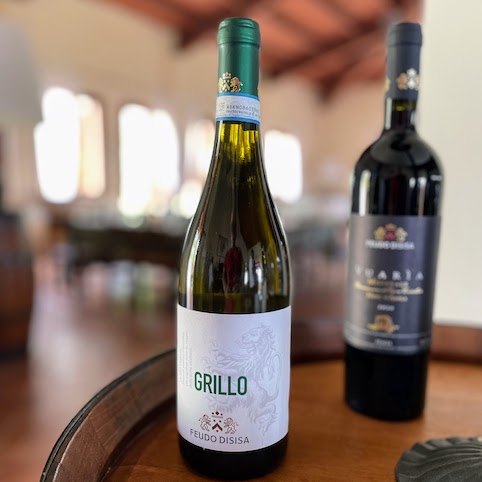
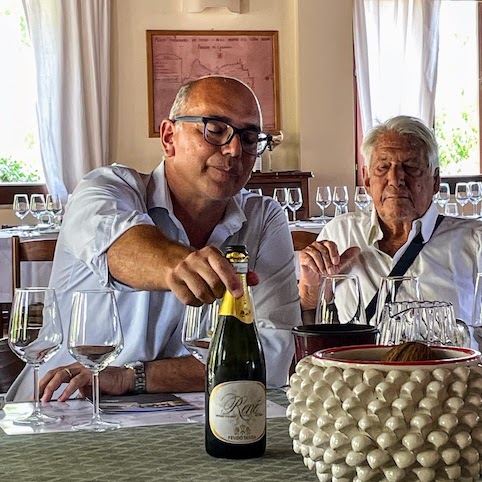
Their Grillo, Chara, Nero d’Avola and Adhara wines are fresh and revitalising. Their particularly deliciously crisp Grillo is a star wine, while their sparkling wine René, named after the patriarch, comes  from the oldest Chardonnay vineyard in the Feudo. As we taste through their range of wines, René is front and centre with his glass, and he’s not spitting any out. Mind you, neither am I.

Vinifying up a storm 

The fresh energy at the Tola winery is also palpable. As I tasted the wines in their ultra modern building south east of Palermo, the skies darkened and the giant windows framed dramatic lightning storms over the gulf of Castellamare to the north.

The winery crackles with life – all white surfaces and sharp angles it’s run by Francesco Tola almost 400m above sea level. This makes the temperature moderate –  it can actually be very cold at night – with sea breezes bringing salinity to his classic Sicilian grapes of Nero d’Avola, Syrah, Grillo, Catarratto, Insolia and Zibibbo, as well his international vines of Chardonnay, Sauvignon Blanc and Pinot Noir.
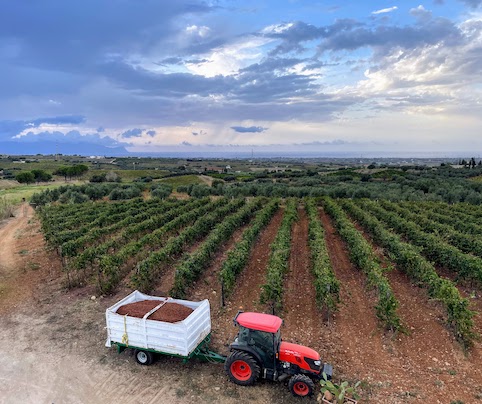
He uses steel tanks a lot, to keep the freshness of the grapes alive to produce light, zesty Nero d’Avola and, as a very modern winemaker, he is happy to use the latest machinery for efficiency, while keeping his CO2 emissions low. 

Out back a machine is processing just picked grapes, blowing streams of stems into a pile to be composted. I can’t help but notice the workers here are all wearing Kippahs. ‘ Ah yes,’ says Mimmo, ‘this batch is for kosher wine and so can be only touched by Sabbath-observant Jews from the harvest to the bottling’. An interesting example of finding markets for his second division grapes.

His flagship red wine Black Label – Nero d’Avola Doc Sicilia – though is traditionally made from the best hand harvested grapes and is an intensely fruity example, while his sparkling wine, made from Catarratto and Grillo grapes, gets its fizz from the Charmat Method, where the second fermentation that gives the lovely bubbles is created by using large pressurised tanks, and not bottle ‘dosage’, as used for Champagne. This makes for wonderfully bright bright fruit flavours

Concrete Proof of change
Concrete often gets a bad rep. In the old Soviet Union it was used for shoddy buildings that fell down a lot, usually due to the ‘concrete’ being made of flour, water and potato peelings.

However for a long time proper concrete was the storage vessel of choice for winemakers –  cheap, easy to clean, stable and hardwearing, it’s also slightly porous and its thickness makes the wine inside less susceptible to temperature changes or ‘shock’. 

Stainless steel seduced many winemakers in the 1980s and lots of old concrete tanks were literally smashed up. Back at  Tonnino Baglio Ceuso, with the aubergines eaten, I went with the chef’s daughter, Francesca, to see the usual steel vats, but also their row of concrete tanks that were still in place when they took over in 2023.

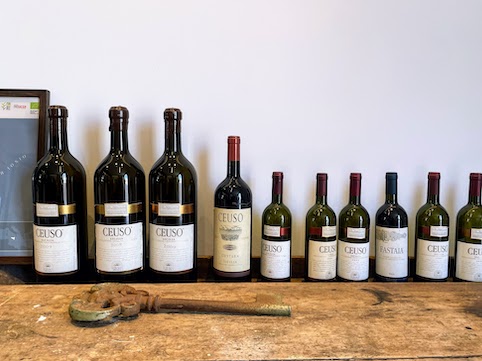
Their flagship wine Ceuso, created by enologist Giacomo Tachis in the 90s, is a modern blend of Nero d’Avola, Cabernet Sauvignon and Merlot. After fermentation, the wine is sent to mature in these old cement tanks before moving on to Seguin Moreau barrels. The result is an exceptional wine with velvet tannins and which can be aged for years in your own ‘cellar’.
They also produce a delicious dessert wine, ZIBÒ Made from their best Zibibbo grapes, it’s a reimagined Sicilian classic being fresh and balanced and not as cloying as older styles.

The variety of wines at each winery was remarkable. Innovation was everywhere and this was confirmed at a final tasting in town with twenty six producers and their wines present. It was head-spinning and not just because of the wine being drunk.

Twenty six passionate (yes, for once that word is appropriate) winemakers is a big crowd and whilst I tried to sample every wine, it was impossible. So many superb wines in one place was a remarkable one off event, and all the winemakers were lively and refreshingly young and keen. I naively asked some of them if they had ever wanted a different job from the family business and not one said ‘yes’ and no wonder.

The work is undoubtedly hard; it can be heart-breaking when a year fails to meet expectations, or an experiment with planting fails, but the joy of creating something superb cannot be beaten.  Sicilia DOC wines are moving forward at pace, the bad old days are over, and their wines should be on everyone’s oenological shopping list

The sausages, by the way, were delicious!

Porte Noire Review

There’s dog on the menu and a lot more besides at this cool wine bar slash restaurant beside the canal in Coal Drops Yards.

Okay I admit the dog bit is pure click bait. There is indeed a dog at Porte Noire but he’s very much alive and wagging. After a fraught, irritating, windswept search for the restaurant located in the base of one of the old gasometers, now fancy apartments, his happy face behind the glass doors waiting to welcome us cheered us up no end.

His name is Cooper and he belongs to the co owner  David Faber, the founder of Connaught Wine Cellars and his presence rather sums up the wine bar’s character – warm, welcoming and cheerful. The other co-owner is Idris Elba, by the way, also a bit shaggy and loveable and curator of his very own champagne brand, Porte Noire, after he and David visited the Sanger Viticultural School in Champagne in 2018. His Porte Noire champagne and cognac are on the drinks menu, of course.

David has taken his own vast wine knowledge and placed it in a restaurant setting and the result is a place that is a wine lover’s ideal spot, but  the food makes it not just a banlieue for the bibulous.

The curve of the old gasometer makes the room pleasingly unusual, while the metal of its construction blocks out mobile signals. This was not deliberate, but it does have the effect of making people put away their phones and concentrate on wine, food and friends. Given the amount of tech types in the area this may be the only oasis they have away from their screens. I don’t think there is any guest wi-fi available, at least none showed up on my ‘phone.

Outside is seated and canal facing and I can well imagine how nice it must be come the summer. Incidentally if you follow Google Maps from Kings Cross you will arrive from this direction and you won’t get as lost, as we did. Once at the door you pass by an impressive wine wall at the entrance, where you can also catch a glimpse of cabinets of cured meats

The menu is short, compared to the wine list, which is long. I believe there are over 800 wines in the cellars. I do like wine, but I make no pretense of knowing a lot so we gaze at the wine list rather blankly, while eating from an excellent charcuterie board. There are cornichons, I do love the crisp vinegary tang of cornichons, but  I would have also liked some sliced baguette and a big cold lump of butter as well.


Wine help is at hand from the sommelier, who doesn’t make us feel ignorant, but is friendly and keen to find us wines we’ll enjoy. Prices are reasonable I suppose for London, but one can still wince a bit at £12.50 for a small glass. Still you can pay close to that for rubbish wine in many places, and these wines are very good, Plus what does a pint of cooking lager in a London pub cost these days? Almost £7.00.

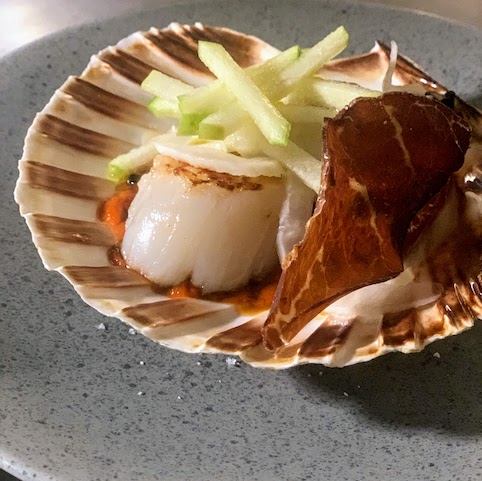
With the charcuterie devoured we turned our attention to Truffle and mushroom arancini n and truffle mayo, and Devonshire hand dived scallops , Bresaola crisps which we drink with Chateau Paillas, Cahors. This  pairs well with both the shellfish and the arancini. The scallops are butter soft and creamy, with a gently spicy sauce buoying them up, the bresaola a salty texture contrast.

Arancini are crispy fresh and the bosky flavour of the mushrooms is set off by the rich truffle in an unctuous mayo. When no one is looking I use my finger to scoop up the last of it.


We move to a glass each of Lyseras Blanc 2023, a soft yet zesty white which is parfait with my stuffed squid. Not the most elegant of dishes, it looks like a Zeppelin has landed on my plate, it’s a powerfully flavoured dish thanks to a rich stuffing of chorizo and a bed of sun-dried tomato tahini.

The squid is a little bit tough, nothing to worry about, but it could have been softer. It’s a good bistro-style dish overall and I like the crispy cavolo nero on top. Cavolo nero is a type of kale and baking the oiled leaves makes it very palatable. Boiled or steamed, it usually comes out as more of a penance than a pleasure.

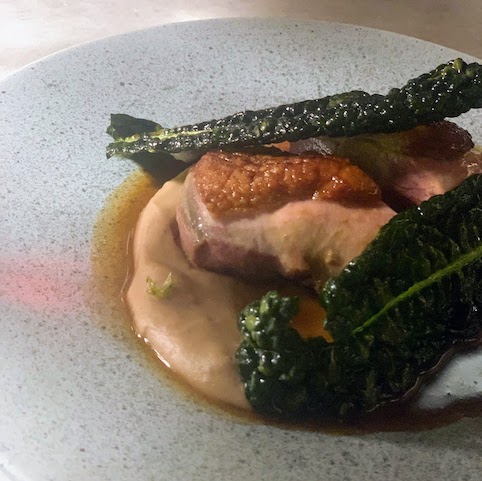
M is on, Shropshire duck breast, chestnut puree and a pinot noir jus. He really loves that puree, mentioning how nice it is several times. The jus is jus(t) great too, he reckons and the duck is perfectly cooked, a hint of pink and no more. He also gets those cavolo crisps and likes them as much as I do.

Unsure what to have on the side, we order the ‘famous’ chickpea chips to share. Like panisses, the south of France street snack, these are based around Gram (chickpea) flour. A thick batter that once set is deep-fried. Delicious and addictive, especially when we dob them into the thick luscious mayo served generously with them.

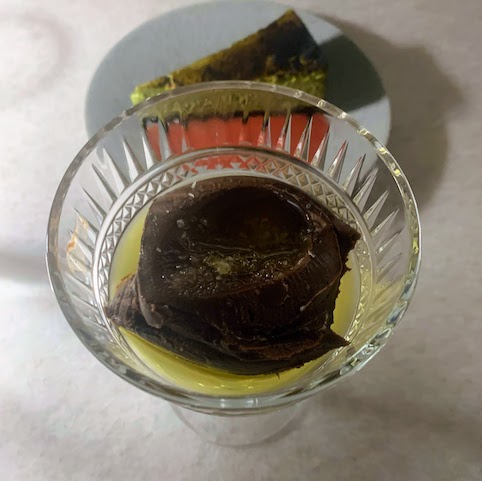
We end with Burnt Matcha Cheesecake  on a raspberry puree, and a chocolate cremeux with Calabrian olive oil and Maldon sea salt. The latter was a bit too heavy for me, although chocolate fanatics would love it. The olive oil worked surprisingly well, but personally I would hold back a bit on the salt. The cheese cake was gone in seconds, so that was clearly well liked.

Cooper came round on his patrol, seeking more head rubs and praise, which we were more than happy to give him. Praise to David and Idris as well, they’ve created a lovely little place at Porte Noire that has a lot of taste and a lot of style.

A bit hard to find (again, use Google Maps and not Apple), it’s hard to beat for a relaxed glass or two and some highly competent food.

Valentines’ Day sees a candlelight dinner at Porte Noire with live music

Wine is available to buy both in the ‘shop’ and online and there is a set lunch every weekday.

Gasholder 10 , Unit A 1 Lewis Cubitt Square

Fiery Food? Cava Can Handle It

Cava is not just for celebrations. This sparkling wine from Catalonia is certainly fizzy enough to liven up any joyous event, but what about served with food? We decided to see if Cava could handle the sommelier’s pairing nightmare – Indian.


Cava is often overlooked as a sparkler, with most people heading straight for the Prosecco when they want a night out on the fizz, or a bulk party drink that won’t break the bank. Cava though has a great deal going for it.

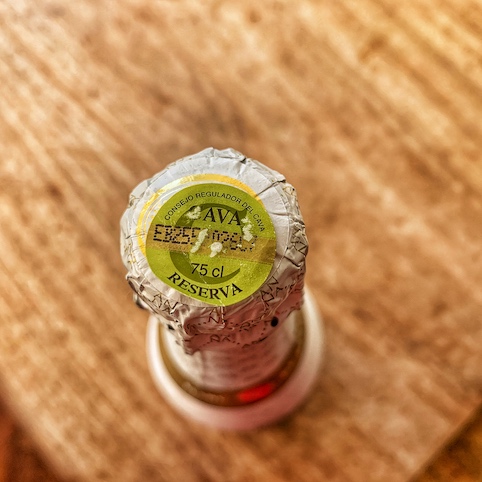
It’s a Denominación de Origen (DO) sparkler from Spain and only cavas produced in the traditional method can be called “cava”, anything else is just a sparkling wine.

Most cava comes from the  Penedès area in Catalonia, and the centre of production is the village of Sant Sadurní d’Anoia where the big guns can be found, namely Codorníu and Freixenet.

Cava is made by the champagne method, and the Spanish still call it champán, or champaña,  in Spanish, or xampany in Catalan, but technically that’s illegal and you won’t find it on any bottle labels. The French get upset, you see, as a good Cava can outperform many a champagne.

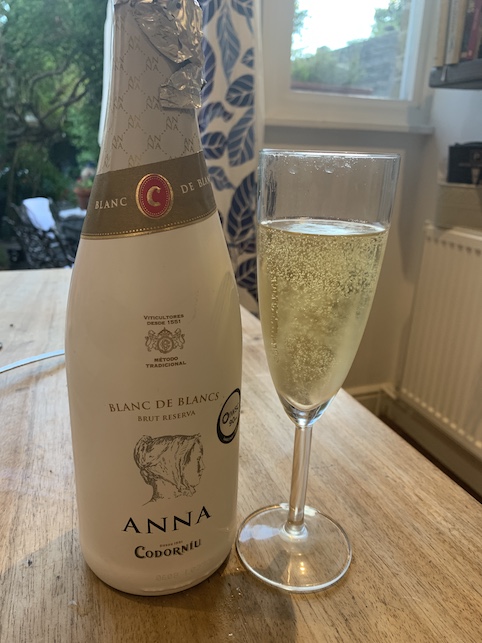
Anna de Codorníu Brut NV Sparkling Cava is a combo of the Chardonnay grape with the three classical cava varieties (Parellada, Macabeo and Xarel-lo) which gives it an extra dimension.  It comes in a white wrapped bottle which makes it stand out rather beautifully, the only problem is you can’t see how much cava is left.


That’s ok though, because at around just £13 a bottle you can simply open another. And at a reasonable 11.5% ABV, it won’t leave you demolished by the time it comes to dessert.

The first cava to incorporate Chardonnay, ‘Anna’ honours the Codorníu heiress who married the viticulturist Miquel Raventós in 1659. Since then the Raventós family has owned Codorníu and retained the Anna name as a world-renowned brand. This is Spain’s favourite sparkling wine – and the Spanish do know a thing or two about cava.

We bet that no one in Spain has ever tried it with a curry before though. Only a Brit would do that.

The Eats

We got our food in from our local (ish) ‘Indian’ Balham Social who do things differently with a distinctly modern attitude.  So the usual bottle of Cobra beer was always out of the question. The food arrived in a stylish bespoke bag and all the dish containers were above average quality. Particularly impressive was the way the containers kept the food looking good, this is not your average Indian and its presentation even on takeaway was perfect.

Balham Social. Best Indian in South London

Would the citrus, apple notes of the Cava help or hinder the food? Would the flying Cava cork break another lampshade? Can Cava get turmeric stains out of the carpet? We aimed to find out.

Of course opening the Cava is always fun; do you go for the celebratory loud pop, plus ricocheting cork, or the restrained ‘pomp!’ you get when calmly twisting off the cork? We are ‘pompers’, less waste and damage.

Received wine wisdom is that sweet wines go best with spicy food, and it’s certainly true that a wine which seems unbearably sweet on its own becomes a different animal when the chili kicks in. Still rules are meant to be broken and Anna is as dry as Jeremy Paxman,

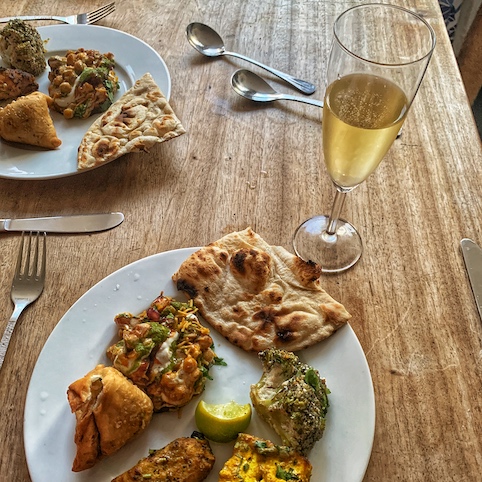
Our first dishes of tandooried vegetables, paneer and Masala Chana, Punjabi samosa with mint, tamarind chutneys and sweet yoghurt, were superb; fantastic flavours that the Cava worked very well with, crisply refreshing our palate in between bites with its citrus and fizz.

At first it seemed odd to be drinking a sparkler with an Indian meal, and not a fizzy lager, but we soon got used to it.

One particular advantage of Cava over having beer with Indian is that it didn’t fill us up, which was good as the food was generously portioned.

Grilled lamb chops were stunningly good, perfectly charred outside and pink within, fiercely hot which had us gulping the chilled Anna, and slathering on the supplied mint chutney, to douse the flames.

This and excellent chicken and spinach, the spinach creamily pureed, perfect basmati and fluffy nans made for a great meal made extra special by the spin put on by Cava.

Try Cava with your next meal, you’ll be very pleasantly surprised at just what an everyday drink it can be,

Clue up on Cava – there’s more to it than you might think. www. cava.wine/en

Cava De Guarda

Aged for a minimum of 9 months, Cava De Guarda is the youngest of the Cava range.

Bursting with freshness, these Cavas are light, fruity and citric, often expressing a palate of white flowers and fruits. Perfect with light apéritifs or fresh seafood.

Cava de Guarda Superior Reserva

The second youngest, Cava de Guarda Superior Reserva is aged for a minimum of 18 months, creating more depth and complexity. Very fresh, with notes of peach, apricot and a touch of toast, these Cavas are ideal with crab cakes or grilled mushroom burgers.

Cava de Guarda Superior Gran Reserva

Cava de Guarda Superior Gran Reserva is even more complex, aged for at least 30 months. With strong notes of toast, baked apple, walnut and butter alongside smoky flavours, these Cavas are very elegant and a great match for a wide array of cuisines. Try alongside a traditional Spanish paella or vegetable linguini.

Cava de Guarda Superior de Paraje Calificado

And finally, as the name suggests, Cava de Guarda Superior de Paraje Calificado (qualified location) indicates Cava from a determined area specially chosen for its distinguished terroir. Aged for a minimum of 36 months, but often much longer, these Cavas have an amazing aromatic complexity with ripe white and yellow fruit on the
nose with notes of aromatic herbs, mushrooms and truffles.

They are the perfect pairing for more complex meals such as chicken katsu or vegetable curry.

Cava Rosado

Or why not try a Cava Rosado to add even more elegance and glamour to your summer get-togethers? Also made in the traditional method and with the same categories as white Cava (except for Paraje Calificado), Cava Rosado is made with the skins of red grapes resulting in a beautiful pink colour and notes of red fruits, fresh
berries, bay leaves and flowers. Perfect to have as an aperitif or alongside your favourite fruit salad.


Wine cathedrals and wondrous wheeled adventures

Up in the Terra Alta in Northern Spain, they have an almost religious reverence for white Grenache and a building to prove it. I cycle the Greenway to discover more

Sunset over the mountains

‘I’m not much of a cyclist,’ I tell the man fitting me out with my bike and helmet. To be honest, and I keep this to myself, the last time I rode a bike it had gears labelled Sturmey Archer and my short trousers had name labels.

‘That’s okay,’ he replies, ‘it’s all downhill from here.’ ‘Story of my life’, I think, as I try to get onto the saddle in a dignified manner. I fail and the bike shoots backwards and I make contact with the crossbar in a painful way.

The old railway station

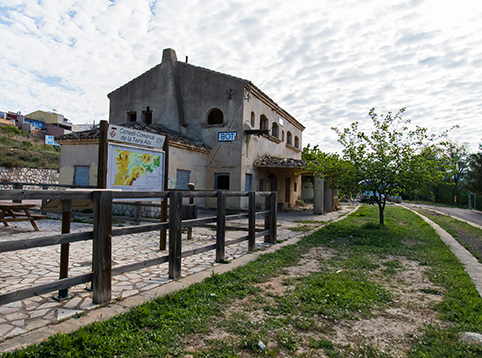
We’re at the Horta de Sant Joan train station in the Terra Alta Tarragona province  in Catalonia, or Catalunya if you wish to be politically more (or less) correct.

It’s a small and very pretty town on a hill, inhabited for many, many centuries, and also a place where Picasso used to hang out.

There was once a single-track railway line that ran up to here created by republican prisoners of the war in 1942. Continue reading

Sun, sea and sustainability in Ibiza

Known for its club culture, there’s also a different beat in Ibiza, one that’s all about sustainability, Zero Kilometre sourcing and the rise of the female chef.

A wild and lonely place

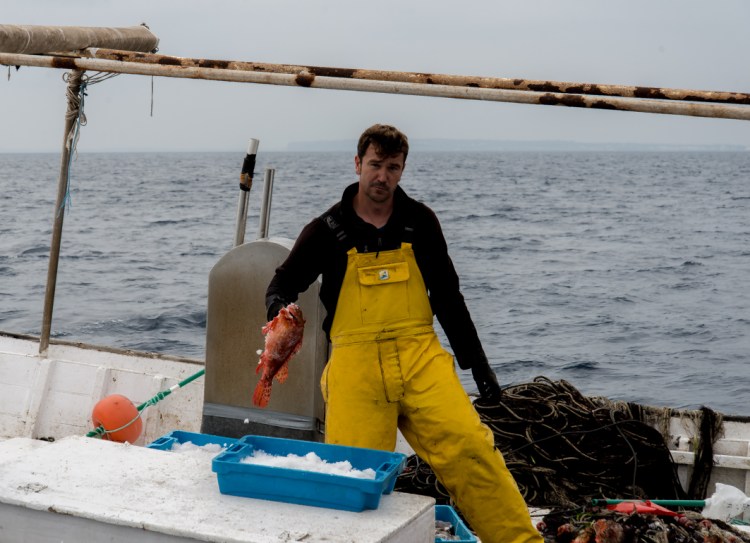
‘Skreeeeek, skreeek, skreeek’, I’m watching a man laboriously pull in his fishing net by hand. His small ancient local boat, called a Llaut, is bobbing about on the water between Ibiza and its smaller neighbour, Formentera. The net, all 5km of it is being slowly retrieved using a large wheel as a capstan. It’s badly in need of some WD40, hence the ‘fingernails down blackboard’ noise it’s making.

Not a large catch

Every now and then the fisherman bends down to retrieve a fish from his net. If it’s too small, it goes back over the side otherwise it goes into the cold box. His nets are only left out for an hour each time to avoid any chance of the fish being crushed to death when the haul is good.

As a method of fishing it’s old and ineffective, but that’s the point. The fishermen of Ibiza have embraced the need for sustainability.

You can fish over there!

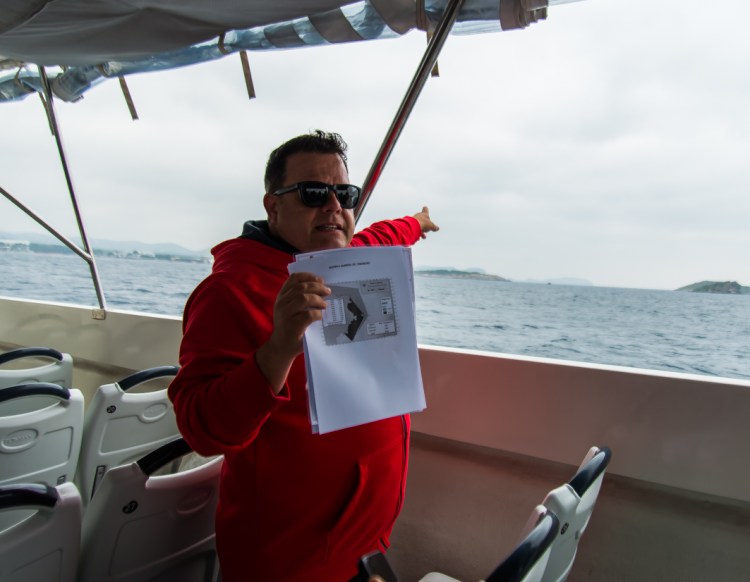
On our boat, Pere Valera who heads the Ibizan Fishermen Guild, pulls out a chart and shows me where in the local waters large scale trawl fishing can take place, where it has to be done only in this old style and where it is totally banned so that the fish can breed in peace. This last area is Es Freus Marine Reserve of Ibiza and Formentera, which was set up in 1999.

It takes in the far south of Ibiza, the north, the west coast of Formentera and the space that separates them with a total area of 13,617 marine hectares, making it the second largest protected marine area in the Spanish Mediterranean.

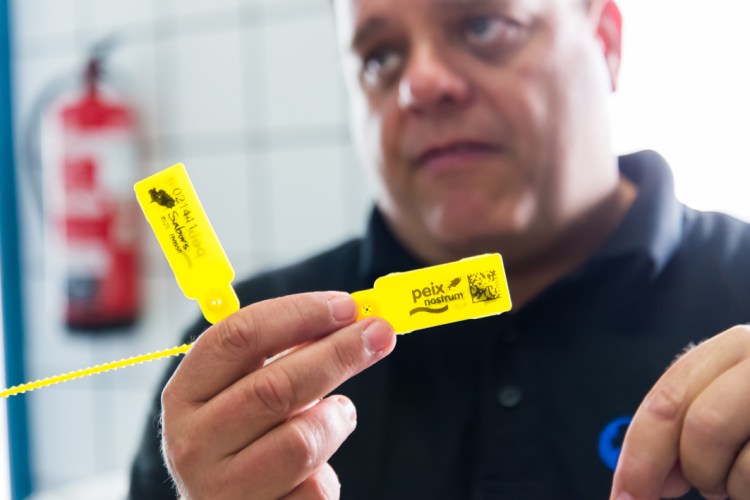
Back on shore, at the Guild headquarters where all fish are processed, he shows me some more of how the system works. The fisherman all signed up in 2008 to an initiative called Peix Nostrum – Our Fish.

Bagged and tagged

Under this ‘brand’ bright yellow tags are clipped to each fish and lobster and these must remain attached all the way to the market, and the fish must arrive within four hours of being caught.

The tag gives information on where the fish was caught, precisely when it was caught and by whom, as well as guaranteeing it has been processed correctly.

Bullet de Peix

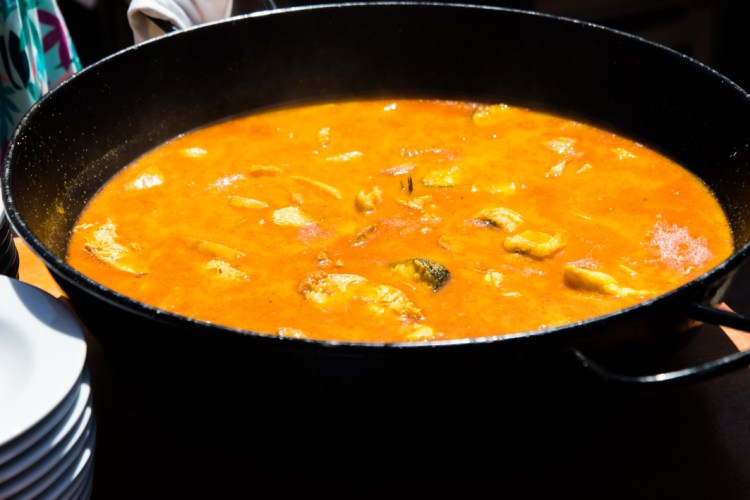
This means that every restaurant on the island can be confident its fish has been supplied in a sustainable manner. And that matters, both to the chefs and to their customers. Everyone loves the local fish stew Bullit de Peix and they want to know it’s been made with care.

‘None of the fishermen in Peix Nostrum wants to empty the sea,’ Pere says, waving a fish about. ‘We want fishing to continue for our children and grandchildren, so we only catch reasonable amounts of fish and shellfish. And it works. We’re the only part of the Mediterranean where the lobster is not disappearing, for example.

Eco and very friendly

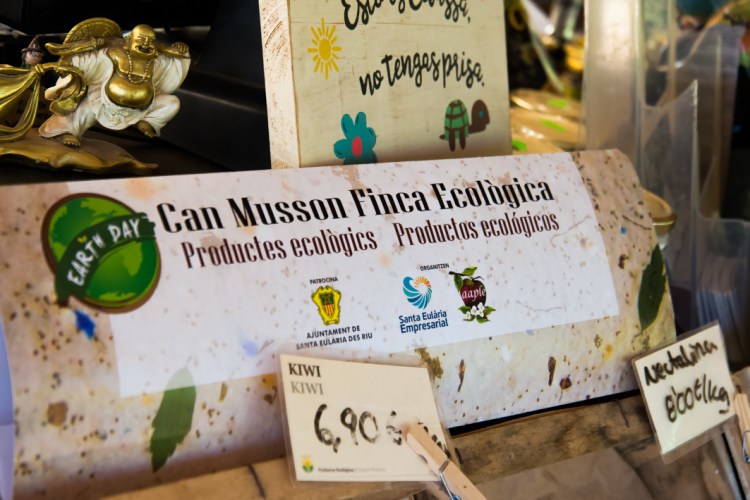
Back on dry land to the west of the town of Santa Eulalia Del Rio, is Can Musón. Founder and driving force María Marí Colomar was about to retire from her work as a fashion designer when she was horrified to find a local child, when asked to draw a chicken, drew a box instead.

So, she picked up a spade and not a pen and created a wonderful place to teach the upcoming generations the importance of sustainability of local produce and of rare breeds.

Mari

Here on her 65,000 sq. eco farm she grows organic fruit and vegetables in profusion, as well as many herbs too. She also raises rabbits, pigs and goats, most of them local breeds that need protecting from dying out.

The produce is all sold out the front from a large market stall, as well as served in the simple but delicious cafe. This area is discreetly wealthy with plenty of expat and second-home Brits around. They have a very Notting Hill vibe about them, with the women drifting about in floaty boho dresses and hats, all topped off with subtle designer sunglasses.

They help keep the farm paid for, its main purpose being to educate the children who come out on regular trips to the farm school – S’al lot Verd (it means ‘the green youngster’ in Catalan), to see where food comes from and to be schooled in the need for sustainability.

A digestif

Mari puts me to work making a bottle of Hierbas, the local post-meal stomach calmer. Into a bottle of spirit go 21 fresh herbs from the farm, these will then steep for as long as possible to bring all manner of complex flavours and remedial qualities to the drink.

I screw the top on tight and hope baggage handling doesn’t turn the Hierbas into a big mess in my suitcase. That would really give me an upset stomach.

Zero Km sourcing is big with Ibizan restaurants. The closer the produce is to the plate, the better. Not just for the taste of course, but also for the freshness and the fact that no transport but Shank’s Pony is needed, which cuts helps pollution on the White Island.

People who cook in glass houses

At Can Domo restaurant, a beautiful Agroturismo hotel and restaurant created from a 17th Century hilltop farm by a husband and wife team and located up an axle-breaking dirt road in the north of the island, 18 km from Ibiza town, they have over 600 olive trees surrounding them. Arbequina olive trees and Picual olive trees are all tended organically to produce the award-winning fruity, floral oils they use to cook with and also sell.

A chef and his produce

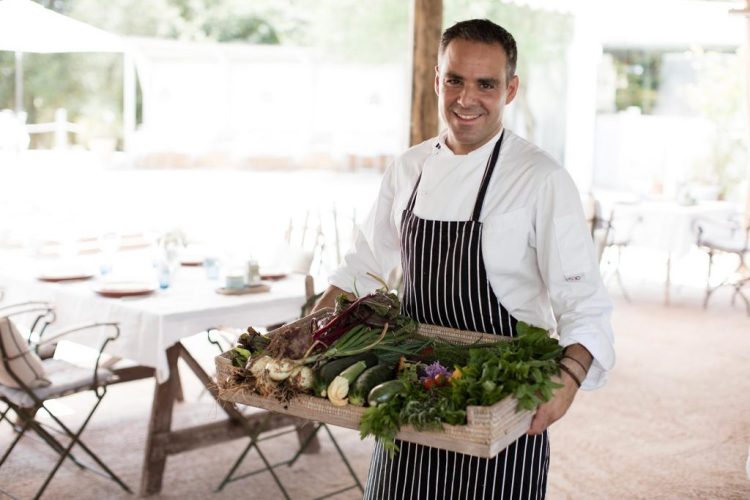
They also have a vegetable plot that produces almost all chef Pau Barba needs to create his stunning dishes for his farm-to-table restaurant located in a glass-walled room across from his semi open-air kitchen. He cooks and his wife takes care of the design and running of the hotel with its 8 rustic-chic individually decorated rooms in whitewashed stone outbuildings

The wine served is from Ibiza; ‘of course’ you might say, but in fact it’s something you’d not have said twenty or so years ago because Ibiza just didn’t make wine then. Today though the island has around seven wine producers and one of the most successful is Can Rich.

Earthy goodness

Since starting up in 1997, Can Rich now produce only organic wines, and were one of the first people to make wine in Ibiza since the Phoenicians left about 2000 years ago.

Can Rich, like all Ibizan wines, differs from other Spanish wines. The almost non-stop continual sunshine of Ibiza means the red Monastrell grapes can be harvested earlier and so escape the full blasting heat of summer, and there are minerals in the grapes unique to the island, all characteristics which come out on the nose and the palate.

Monastrell produces a very earthy, vegetal smelling wine. I thought my wine was corked when first served it, but soon grew to love it and drank little else after.

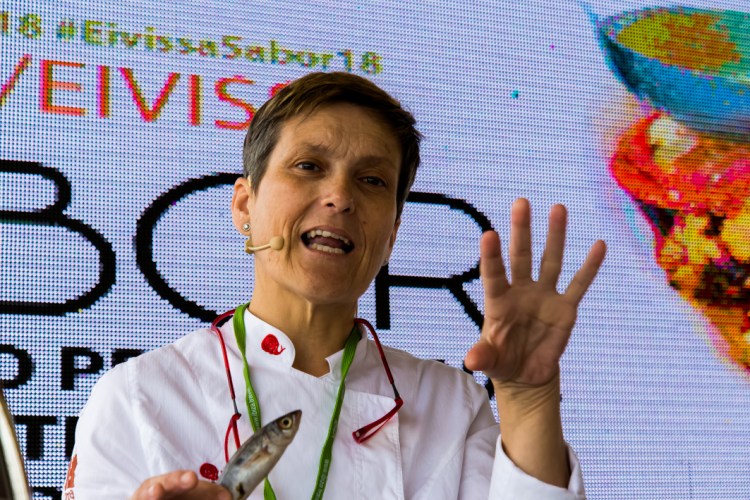
Chef Sílvia Anglada

The sun is beating down at Club Nautic Sant Antoni and Ibiza Sabor 2018 is under way and packed with chefs, trainee chefs, suppliers and press. I can see Pere who waves cheerfully as well various other chefs I’ve met over the past few days.

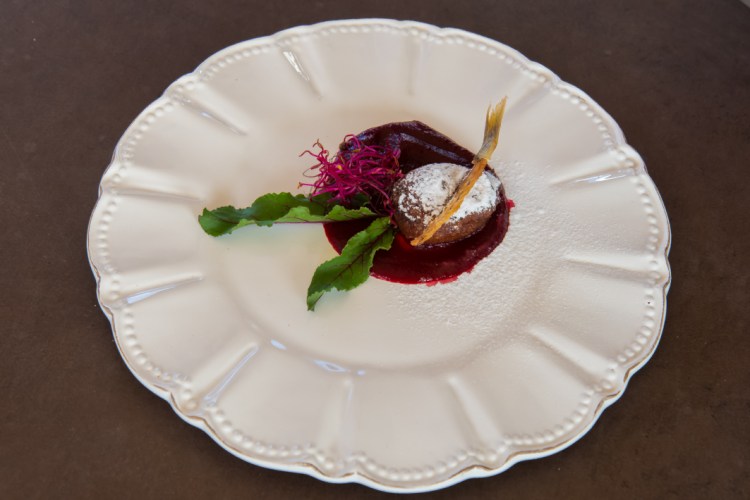
A beetroot donut

It’s very much focused on sustainability and has a focus too on female chefs. Sílvia Anglada of restaurant Es Tast de na Sílvia, in Ciutadella, Minorca runs her restaurant on strict eco lines and demonstrates one of her signature dishes, a kind of cheese doughnut with a beetroot jam

Coca bread topped with roasted tomatoes

She’s followed by Marga Coll from restaurant Miceli, in Majorca who tells us her restaurant never has a fixed menu and is driven entirely by what she finds in the morning market. As she talks she creates a dish of coca bread topped with roasted tomatoes, dried fish and cheese from Can Caus an artisan producer.

Not your average Mr Whippy

Alejandra Rivas runs Gelateria Rocambolesc, a project of the Roca brothers of El Celler de Can Roca fame, and she is married to Jordi Roca. Her demonstration of novel ways with ice-cream, both sweet and salty, was refreshing and it’s easy to see why she now has four gelaterias in Spain.

Paella all round

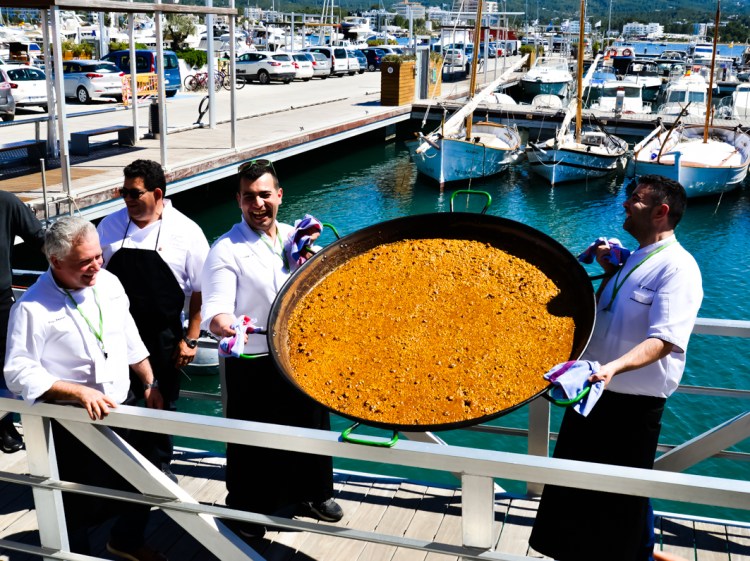
Lunch, of 12 courses, each prepared by one of the chefs, was a triumphant celebration of the Balearic produce, the passion for sustainability and the talent of the islands’ chefs. The giant paella finally served was the icing on the cake,

If you’ve been putting off going to Ibiza because you don’t dance that much anymore, think again. That side of the island is one very small part of what it does, so pack a knife and fork and leave the glowsticks at home.

Our thanks to my hosts Ibiza Travel and to all the marvellous chefs and producers of the White Island who work so hard every day.

Can Domo images sourced from their website

Breaking the mold in Bordeaux

Sweet Bordeaux is reaching out to a new, less formal, drinker and showing off its multiple expressions. Nick meets the winemakers that can pair the wine with more than just pudding.

‘It’s corked!’ says Monsieur Labergere, director of Château Rayne Vigneau pulling a sour face.

He flips out the contents of his glass and it falls like rain down through the leaves of the tree and onto the ground. ‘Pas de probleme,’ is Au Fil du Ciron climber Vincent Galle’s response as he swings off in search of a fresh bottle.

treebigThe recoil of his move makes the suspended platform we’re sitting around pirouette wildly and we hang on tight hoping our harness ropes hold. It’s about a hundred feet straight down and we don’t to end our wine tasting by getting out of our tree the wrong way.

It’s not normal of course to have a wine tasting at the top of an ancient pine, having first climbed hand over hand up a rope to get there, but for Château Rayne Vignaud a sweet wine maker here in south west France, doing things differently is the new sweet Bordeaux way. Continue reading

Go Dutch for great food at sea.

Today’s cruisers attach massive importance to the quality and variety of food on board. Nick Harman sees what Holland America’s newest ship has on the menu.

home-bgHolland America is one of the most venerable of cruise lines, but perhaps not the best known in the UK. Founded in 1873 for many years it ran regular passenger sailings from Holland to New York.

In fact when Rotterdam was the gateway to a new and better life for European emigrants in the early part of the last century, it was mostly on Holland America ships that they sailed.

I was invited to Rotterdam to sail and eat on the ms Koningsdam, the newest addition to the Holland America Pinnacle-class cruising fleet, and the largest as well. It was about to be dedicated by Queen Maxima of the Netherlands before we sailed to Amsterdam overnight.

All aboard for ‘free’ food Continue reading

The Passion of Plaimont. Wonderful wines in South West France

The bids are coming in thick and fast and the French auctioneer is sweeping his fringe out of his eyes with one hand and waving his gavel about with the other as he struggles to keep up. A thousand euros bid soon becomes two thousand and then ‘best of order’ has to be asked for as it hits €3000 and the crowd gasps Gallicly in astonishment.

At €3200 the hammer finally comes down and Didier Vinazza, a man who rather resembles Father Dougal in a Gascon beret is surrounded by congratulations. He’s just sold a quarter barrel of his best Pacherenc for the equivalent of over €50 a bottle. More in fact, when you consider the American buyer now has to pay the commission, the bottling, labelling and the shipping costs on top. An expensive sixty bottles of wine but definitely worth it for such nectar and the money that’s been raised will be going to good works around the area. ‘I took a risk harvesting in late November but I knew my pebbly clay terroir would be good for the Petit Manseng grapes and they were exceptional,’ he says above the din. Continue reading

The curious case of the Minervois

The region’s wines are well known, the region less so. Nick Harman attends the yearly festival of art, culture food and wine in Minervois, Languedoc-Roussillon.

Red suitcases stand silently on stone islands by the banks of the River Cesse, one of the two rivers whose deep gorges have defended the picture-perfect village of Minerve through the ages. It’s been captured only once, in 1210, when Simon De Montfort’s army smashed the drinking well with massive stone catapults, the largest wryly named ‘bad neighbour’. Forced to choose death by dehydration or to surrender, the inhabitants chose the latter and 140 Cathar refugees, ‘the Perfects’ who refused to give up their faith, were then put to death on the Pope’s orders.

The suitcases symbolise flight and extermination and are just some of the otherwise cheerful installations created by local sculptors for Les Grands Chemins en Minervois, an annual festival in the region. Each chemin, or ‘path’, takes art, food or wine as its theme and guides the visitor through the richness of the area and of its artists, whether they work with a corkscrew, a paintbrush or a frying pan. Continue reading